HBSE 10th Social Science Deleted Syllabus 2026: Check Chapter-Wise Syllabus
Table of Contents
The Board of School Education Haryana (HBSE) has not yet published the HBSE 10th Social Science Deleted Syllabus 2026, but knowing what will be changed can help you in your exam preparations and lessen pressure in bulk. A syllabus with more focused aspects makes it easier to manage time, enhance understanding of concepts, and improve your chances of obtaining higher marks in HBSE 10th Exam 2026.
The primary aim of the HBSE Class 10 Deleted Syllabus 2026 is to promote meaningful and focused learning; this stance corresponds with the National Education Policy (NEP) regarding the removal of outdated and repetitive content. The syllabus reform offers more weight to chapters that represent the key aspects of the syllabus (for example, ‘Bharat and the World’, ‘Democratic Politics–II’, or ‘Contemporary India–II’). These chapters have a higher weightage in the board exam.
In this article, we cover everything you need to know regarding HBSE 10th Social Science Deleted Syllabus 2026, the question paper design, chapter-wise weightage, and main benefits of the removed syllabus.
HBSE 10th Social Science Deleted Syllabus 2026
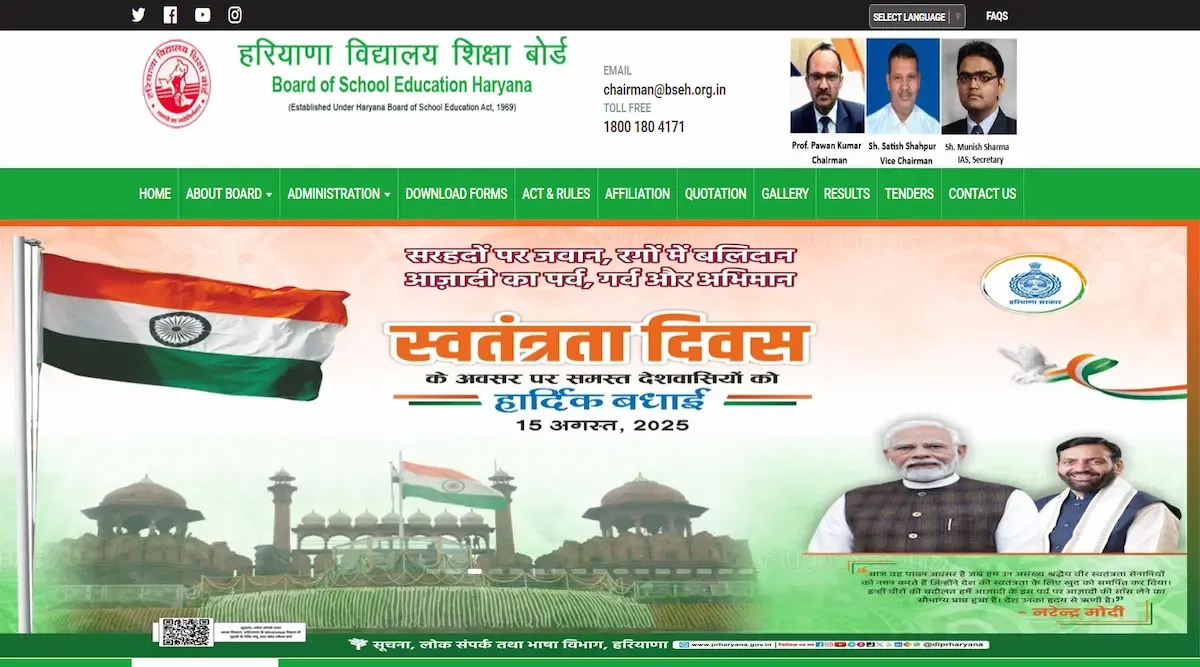
The Board of School Education Haryana (BSEH) has not yet published the HBSE 10th Social Science Deleted Syllabus 2026. The deleted syllabus will be available on HBSE's official website, bseh.org.in. Once the deleted syllabus is available, the link below will be updated.
|
Subjects |
Deleted Syllabus |
|
HBSE 10th Social Science Deleted Syllabus 2026 |
To Be Released |
Also Read: HBSE 10th Syllabus 2026
HBSE 10th Social Science Syllabus 2026 PDF
The HBSE 10th Social Science Syllabus 2026 will be available on the HBSE board's website. In the meantime, you can access last year's syllabus. For understanding the style of the exam, and the pattern of the questions, and the difficulty levels, you will need a current syllabus. The same syllabus for Science can be downloaded by clicking the link below.
|
Particulars |
PDF Link |
|
HBSE 10th Social Science Syllabus 2026 |
Also Read: HBSE 10th Previous Year Question Papers
HBSE 10th Social Science Question Paper Pattern 2026
In order to evaluate students' comprehension, the HBSE 10th Social Science question paper for the academic year 2026 uses a variety of formats, such as essay-style questions, short and very short answers, objective-type questions, case-based studies, and map skills. The question paper carries 80 marks and has a duration of 3 hours. Questions from all four disciplines—history, geography, political science, and economics, will be asked, and internal choices will be offered in every section.
|
Type of Question |
Marks |
Number |
Description |
Total Marks |
|
Essay-Type Questions |
5 |
3 |
Internal options in all three questions. One question from each section: History, Geography, Pol. Science |
15 |
|
Short Answer Type Questions |
3 |
4 |
Write any 3 questions. Topics from History-1, Geo-1, Pol.Sc.-1, Eco-1 |
12 |
|
Very Short Answer Type Questions |
2 |
8 |
Write any 2 questions from 2-mark questions from History, Geo, Pol. Sc., and Eco. Total 8 questions |
16 |
|
Objective-Type Questions |
1 |
20 |
- History-6, Geo-3, Pol.Sc.-5, Eco-4 - 12 MCQs - 3 One Word Answer - 3 Fill in the Blanks - 2 Assertion Reason Questions |
20 |
|
Case Study-Based Questions |
3 |
4 |
Based on case studies from Pol. Sc., Geography, History, and Economics Each question will have 4 subparts carrying 1 mark each |
12 |
|
Map Skill-Based Questions |
5 (2+3) |
1 |
One location-based question from History (2 marks) and one from Geography (3 marks) |
5 |
|
Total |
80 |
Also Read: HBSE 10th Exam Pattern 2025
HBSE 10th Social Science Weightage 2026
The HBSE 10 Social Science syllabus for 2026 is designed to assess students' knowledge of history, political science, geography, and economics. Among these, 'Bharat and the World' (23 marks) and 'Democratic Politics-II' (21 marks) have the highest weightage, followed closely by 'Contemporary India-II.' These sections address important issues such as ancient and Sindhu civilizations,Power Sharing, democracy, federalism, resources, and national development. Prioritizing these high-weight units can help you perform better on the board exam.
|
Sr. No./Book |
Chapter & Unit |
Marks |
|
1. Bharat and The World (23 Marks) |
Unit-1 1) Sarasvati - Sindhu Civilization 2) Major Civilizations of the Ancient World 3) Major Philosophies of the World |
9 |
|
Unit-2 4) Medieval Society: Europe and India 5) Christianity and Islam: Rise and Conflict 6) Foreign Invasions on India |
7 |
|
|
Unit-3 7) Colonialism and Imperialism 8) Movement Against British Colonialism in India 9) 50 Years of Independence |
9 |
|
|
2. Democratic Politics – II (21 Marks) |
Unit-1 1) Power Sharing 2) Federalism 3) Gender, Religion and Caste |
12 |
|
Unit-2 4) Political Parties 5) Outcomes of Democracy |
9 |
|
|
3. Contemporary India – II (21 Marks) |
Unit-1 1) Resource and Development 2) Forest and Wildlife Resources 3) Water Resources |
8 |
|
Unit-2 4) Agriculture 5) Mineral and Energy Resources |
7 |
|
|
Unit-3 6) Manufacturing Industries 7) Lifelines of National Economy |
6 |
|
|
4. Understanding Economic Development (15 Marks) |
Unit-1 1) Development 2) Sectors of Indian Economy 3) Money and Credit |
8 |
|
Unit-2 4) Globalization and the Indian Economy 5) Consumer Rights |
7 |
|
|
Total |
80 |
|
|
Internal Assessment |
20 |
|
|
Grand Total |
100 |
|
Also Read: HBSE 10th Sample Papers
Benefits of HBSE 10th Social Science Deleted Syllabus
The HBSE will be removing some chapters and topics from its Class 10 Social Science syllabus to help ease academic burden and allow you to concentrate on the essential learning outcomes. The advantages of the revision are as follows:
- Less syllabus load means more time to thoroughly review the core topics.
- Less content reduces exam stress for you and helps you to manage your overall studying.
- Improved understanding and insight into key and relevant chapters.
- You will have more opportunity to explore application-based learning and map skills.
- You will also have more opportunities to revise for the higher-weighted topic, which increases their chances of getting higher grades.