Kerala SSLC Science Deleted Syllabus 2026 Check Chapter Wise Syllabus
Table of Contents
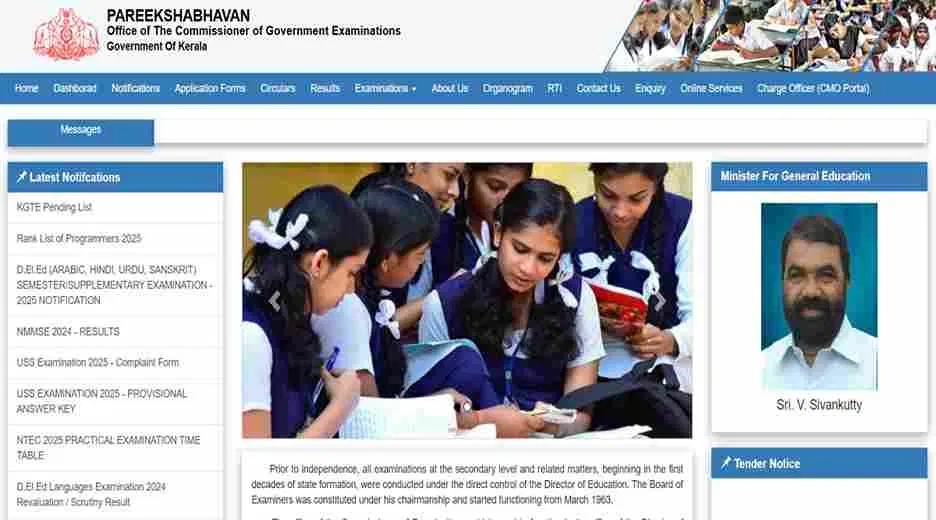
The Kerala Pareeksha Bhavan is the establishment that decides the syllabus for SSLC (Secondary School Leaving Certificate) in the state. The decision to implement the Kerala SSLC Science Deleted Syllabus will reduce the educational pressure for sure. Hence, students preparing for the Kerala SSLC Exam 2026 should learn about the updated syllabus.
The Kerala SSLC Deleted Syllabus will provide a lot of crucial advantages to the students. The modified syllabus will help in streamlining the academic curriculum. Thus, the SSLC Science syllabus will become more manageable. The expert committee of the Board has removed certain portions from the syllabus. This will promote conceptual understanding and the workload will also reduce. Some of the topics and subtopics in the SSLC Science were too complicated. Thus, the unneeded and too elaborate aspects have been deleted from the syllabus. Even the overlapping and less crucial sections have been removed to simplify the syllabus structure. The Kerala SSLC Syllabus covers the streams, namely Physics, Biology, and Chemistry. The Kerala SSLC Science Deleted Syllabus will save immense time and students can score excellent marks in this paper.
This article states all the chief aspects of the Kerala SSLC Science Deleted Syllabus. Hence, the candidates preparing for the Kerala SSLC Exam 2026 must carefully go through the approaching details.
Kerala SSLC Science Deleted Syllabus 2026 - Chapter Wise
It is important to understand the Kerala SSLC Science Deleted Syllabus as then only the candidates can decide the right preparation strategy. Here are the chapter-wise particulars of deleted topics for SSLC Science -
|
Chapters |
Deleted Topics |
|
Chemical Changes and Reactions |
Types of chemical reactions in detail (oxidation-reduction examples removed) |
|
Energy Management |
Detailed working of hydroelectric power plants |
|
The Biology of Movement |
Extensive classification of joints and muscular diseases |
|
Genetics: The Science of Heredity |
Detailed explanation of inheritance patterns Mendel’s dihybrid cross |
|
Environmental Chemistry |
In-depth discussion on acid rain and its effects Chemical equations related to pollution |
|
Electromagnetic Induction |
Application-based numerical problems Applications in complex devices |
|
Refraction of Light |
Derivation of lens formula Construction of ray diagrams for complex lenses |
Also Read: Kerala SSLC Admit Card
Kerala SSLC Science Syllabus 2026 PDF
Once the students have understood the Kerala SSLC Science Deleted Syllabus, they can allocate their time to the most important topics on a priority basis. Thus, one must always check the updated syllabus while creating the study plan. The table below shares the PDF for the Kerala SSLC Science updated syllabus -
Also Read: Kerala SSLC Exam Pattern
Kerala SSLC Science Question Paper Pattern 2026
For Kerala SSLC Science, students will have to appear for 3 separate papers. These 3 papers will be for Physics, Biology and Chemistry. The theory paper will be of 40 marks each and 10 marks are reserved for the CE (Continuous Evaluation). Hence, every paper will be of 50 marks in total. The total valuation for the Science subject is 150 marks (50 marks for Physics, 50 marks for Chemistry, and 50 marks for Biology). The theory paper will be a mix of MCQs, very short-answer-type questions, short-answer-type questions, and long-answer-type questions. The table below states the details about the Kerala SSLC Science question paper pattern in a simplified way. This pattern will apply separately to the question papers of Physics, Chemistry, and Biology.
|
Section |
Number of Questions |
Marks Allotted |
|
A |
4 (MCQs) |
4 x 1 = 4 |
|
B |
4 (very short-answer-type questions) |
4 x 2 = 8 |
|
C |
4 (short-answer-type questions) |
4 x 3 = 12 |
|
D |
4 (long-answer-type questions) |
4 x 4 = 16 |
|
Total |
|
40 |
Also Read: Kerala SSLC Previous Year Question Papers
Kerala SSLC Science Topics Weightage 2026
It is important to know the topic-wise weightage for Kerala SSLC Science as then only students can prepare a rational timetable. One should prioritize the topics that carry the utmost weightage. The table below discusses the topic-wise weightage for the Science subject in an easy way -
|
Topics |
Weightage |
|
Chemical Changes and Reactions |
15% |
|
Laws of Motion |
12% |
|
The World of Carbon |
8% |
|
Periodic Table and Chemical Bond |
7% |
|
Energy Management |
10% |
|
The Biology of Movement |
10% |
|
Genetics and Evolution |
5% |
|
Electromagnetic Effects |
10% |
|
Environmental Chemistry |
5% |
|
Refraction of Light |
8% |
|
Practical-oriented Questions |
5% |
|
Application-based/Case Study |
5% |
Candidates must note that the percentages shown above are the approximate values based on the SSLC Science syllabus pattern. To gain exact understanding, one must visit the designated website of the board at pareekshabhavan.kerala.gov.in.
Also Read: Kerala SSLC Exam Preparation Tips
Benefits of the Kerala SSLC Science Deleted Syllabus 2026
There are numerous benefits of the Kerala SSLC Science Deleted Syllabus. Students must check out the advantages mentioned below –
-
Science is a subject that needs conceptual understanding. Hence, the Kerala SSLC Science Deleted Syllabus will help in promoting focused learning.
-
With the help of the reduced syllabus, students can create a practical study schedule. The syllabus will be finished on time and one will also get the time for revision.
-
Marks will also get better with the reduced syllabus. Hence, a deleted syllabus allows for improving the scores.
-
The saved time can be used for the preparation of other crucial subjects.
-
A reduced syllabus means less burden. Hence, the stress related to board exams will surely go down.
-
While solving the questions from the previous year’s SSLC Science mock papers and sample papers, students can skip the questions from the deleted portion.
-
Teachers will get more time because of the reduced syllabus. Hence, they can explain the fundamental topics in Science in a much better way.
-
A shorter syllabus always encourages self-study. Hence, students will rely on their own abilities to complete the syllabus.
For more such updates about the Kerala SSLC Exam, follow Getmyuni!

![Christian College, [CC] Alappuzha](https://media.getmyuni.com/azure/college-image/small/christian-college-cc-alappuzha.jpg)
![Milad E Sherif Memorial (MSM) College, [MSMC] Alappuzha](https://media.getmyuni.com/azure/college-image/small/milad-e-sherif-memorial-msm-college-msmc-alappuzha.jpg)