
Table of Contents
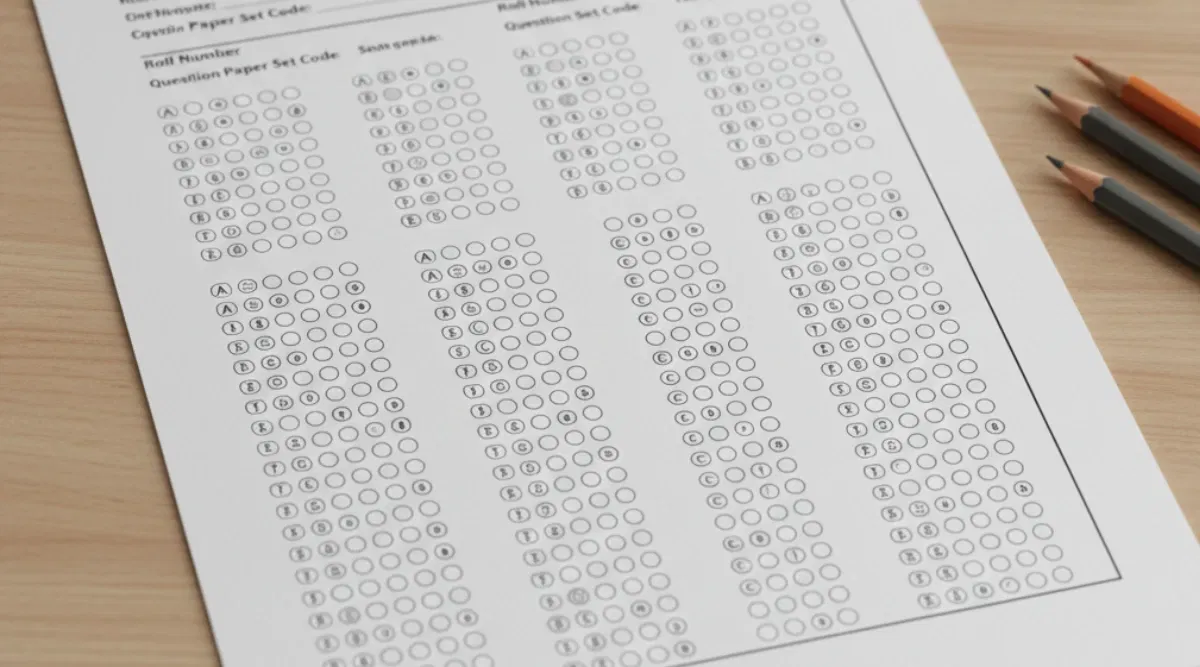
One of the best techniques for excelling in the CMAT exam is to prepare with CMAT sample papers. These papers correspond with the actual examination pattern, the kind of questions and time limitations, and give you a realistic challenge of real examination day circumstances.
Preparing using sample papers, you can develop the endurance to attempt all four sections (Quant, Reasoning, Language Comprehension, General Awareness and Innovation & Entrepreneurship) in 180 minutes. Also, reviewing solutions explains how to identify strengths and weaknesses and build an effective study plan. This ultimate guide will show you how to find the best source of sample papers, analyse your performance and provide tips on how to use these sample papers as part of your final preparation for your exams.
Why Practice CMAT Sample Papers?
Solving CMAT question papers involves more than simply answering a couple of inquiries; rather preparing the psyche to think as the actual test does. The CMAT question paper pattern is based on the format of the actual exam and they contain all five parts: Quantitative Techniques & Data Interpretation, Logical Reasoning, Language Comprehension, General Awareness and Innovation and Entrepreneurship. Solving these under time will make you faster and more accurate, and will also allow you to realise what aspects require more of your focus.
The most helpful advantage of sample papers is that they correspond to the current CMAT pattern and difficulty level. Such sample papers help to give you an idea of exactly what to anticipate, as there is no way to know exactly how reading comprehension will be structured or what types of logic puzzles you will be required to solve. With the help of CMAT Sample Papers, your ability to manage time improves, and your stress levels on exam day significantly reduce. Candidates who solve at least 10–12 well-structured sample papers are far more likely to score above the 90 percentile.
Where to Find CMAT Sample Papers for Free?
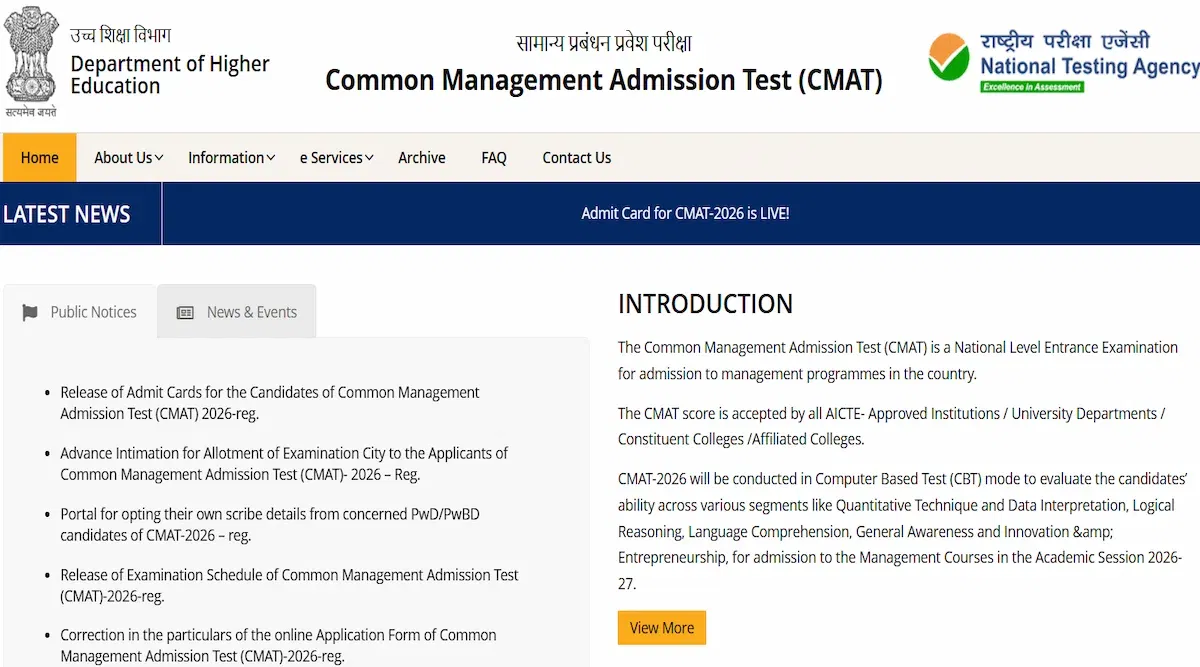
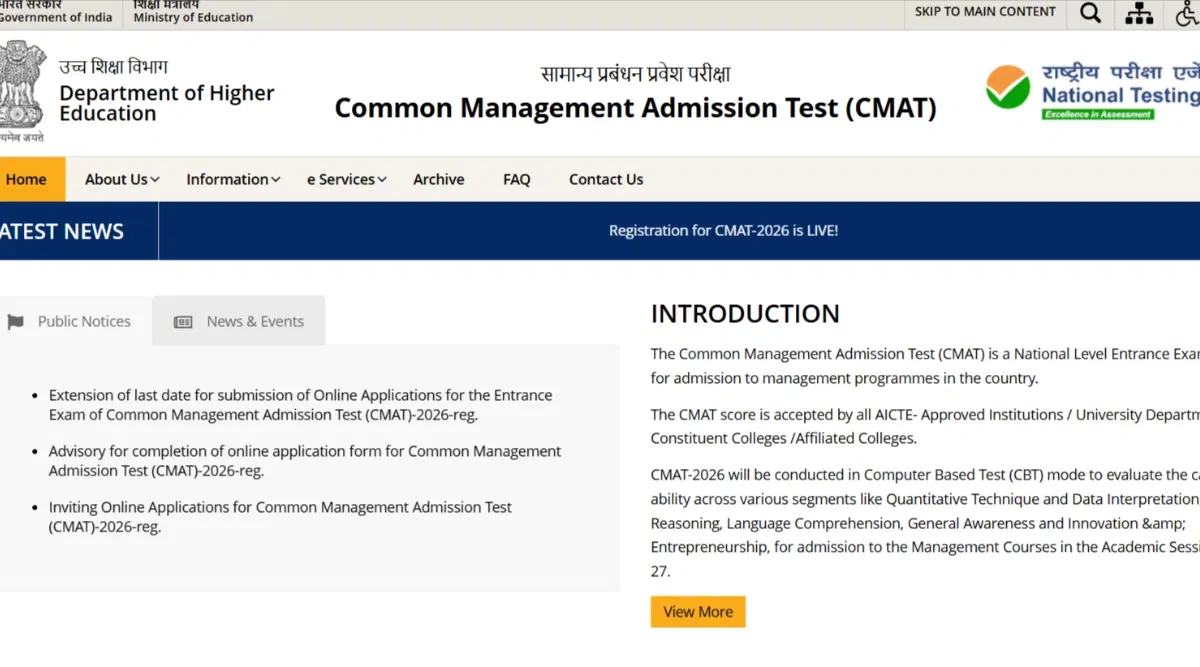
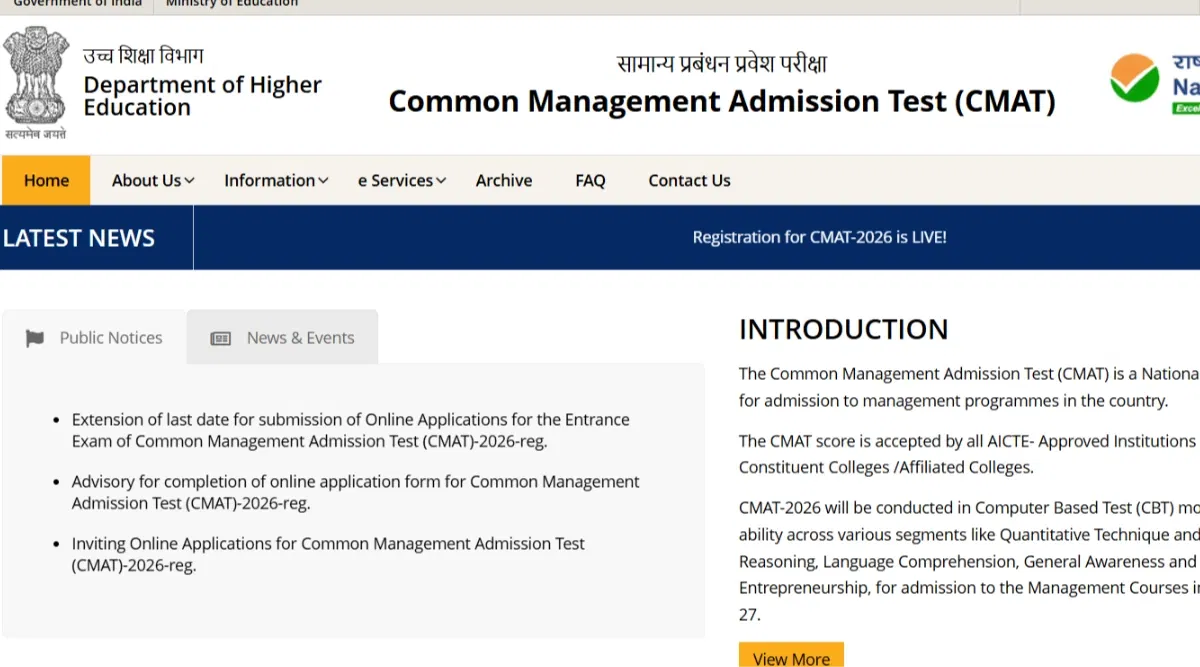
It is possible to get the CMAT sample papers pdf without having to pay any fee at all, provided you have the information. The most credible option is the NTA CMAT official site, as it contains mock tests that simulate the real exam environment. The reason why these CMAT mock papers stand out is that they give the most recent pattern of the exam (what kind of questions are included, how many questions are there in how many sections, and how are they marked). With their resolution, you will understand how questions are set, sections proceed and how you should best allocate the 3 hours of time limit that you have.
Other than the official site, various educational websites, as well as exam preparation forums, have their share of free PDFs of CMAT sample papers, normally depending on the trends of past years of questions. These papers tend to come with an answer key and explanation of how each answer came to be so that candidates can get a grip on the logic behind each answer. Sample papers are one of the most helpful resources in case you want to be accurate or even begin practising: you can get them at no cost and practice your performance without spending a penny.
Also Read: Is Calculator Allowed in CMAT Exam 2026?
How to Use CMAT Sample Papers Effectively?
Solving CMAT sample papers is one of the best practices to get ready for the exam, if you do it right. All of us use them as yet another activity in our prep schedule, solving a paper and rushing to the answer key without reviewing our errors or learning from our strategy loopholes. That approach leads to stagnation. CMAT is not as much about solving questions as it is about performing under pressure, recognizing weak areas and correcting them before the test. Sample papers can be used to enhance time management, strengthen the clarity of concepts and build confidence through repeated attempts at exam-pattern questions if used strategically. Here's how to make each paper count.
1. Simulate Real Exam Conditions
Start by replicating the real CMAT test environment as closely as possible. Take 180 consecutive minutes and attempt the sample paper in one sitting- without your phone, looking at answers halfway through, or taking a break for a snack. Use a computer if it's an online practice or print out the paper if it's in PDF format, in order to get used to reading off paper. Practice in a quiet space, as you will on test day and time yourself section by section. This gets your brain used to focusing for long periods of time, something which is extremely valuable in the real CMAT. Don't appreciate just how physically and mentally draining a full-length test is- this kind of practice builds up that all-necessary stamina early.
2. Analyse Mistakes in Detail
Finishing a practice paper is half the battle- the learning happens in post-test revision. After you've completed it, re-read each question, especially the ones that you've answered wrong or even guessed. Understand why you got it wrong: because of misreading, running out of time, conceptual misunderstanding, or overthinking? Create an error tracker or error log where you insert the subject, the nature of the error and the time spent per question. This allows you to identify patterns and alter your preparation accordingly. For example, if you constantly struggle with General Awareness or Para Jumbles, you know where to concentrate in the coming weeks. Don't read solutions; resolve them to reinforce learning.
3. Build a Practice Schedule
To gain from sample papers, you require a structured routine, not random bursts of practice. In the initial preparation phase, try to attempt at least one full-length sample paper a week. Spend the rest of the week reviewing topics where you lost marks. At the mid-preparation phase, up the ante to two sample papers a week and continue your error log. During the final 4–6 weeks, take to two or three sample papers a week. Supplement sectional tests to practice weak areas without burning out. This steady rhythm of testing, thinking and revising is much more effective than binge-solving in a random manner.
Also Read:
CMAT Sample Paper Practice Ideal Routine
|
Preparation Phase |
Practice Frequency |
Primary Objective |
|
Early Preparation |
1 paper/week |
Familiarity with exam format and sections |
|
Mid Preparation Phase |
1–2 papers/week |
Improve accuracy, time management, consistency |
|
Final Month |
2–3 papers/week |
Speed, stamina and real-time exam simulation |
CMAT Sample Paper Structure
It is vital to know the structure of the actual exam before trying the CMAT sample papers. The CMAT is divided into five unique parts : Quantitative Techniques & Data Interpretation, Logical Reasoning, Language Comprehension, General Awareness and Innovation & Entrepreneurship. There are 20 questions in each of the sections, constituting 100 questions that make a total of 400 marks. Each and every correct answer receives a point total of +4, and each wrong answer receives -1. So, to ensure your practice is in line with what will be expected of you in the exams, let us find out more about what each section is expected to contain.
1. Quantitative Techniques & Data Interpretation
This section tests your number ability and problem-solving skill, typically pairing easy questions with more graph-based questions like bar graphs or pie charts. Topics like Arithmetic (Percentages, Profit and Loss, Time-Speed-Distance), Algebra, Geometry and Number Systems are typically tested. Sample papers usually have a moderate level of difficulty in this section, but some questions are time-consuming. Your speed and accuracy here are the key- finishing the easy questions done and coming back to hard questions later. Try your sample papers to not only solve but time yourself for every DI set. That way, you know how to solve problems in an efficient way without getting stuck.
2. Logical Reasoning
Logical Reasoning is purely about pattern recognition, decision-making and reasoning skills. Puzzles, arrangements (linear and circular), coding-decoding, syllogisms, blood relations and statements and assumptions or conclusions are common types of questions. Although the difficulty level is easy to moderate, time management is a part of it because some puzzles are deceptively long. If you practice sample papers, mark down which types of reasoning questions you are comfortable with and which ones require improvement. Sample papers containing mixed-question reasoning sections are the closest simulation of the actual exam, so practice these from time to time under timed conditions.
3. Language Comprehension
This section tests your reading and interpreting skills in the English language. Sentence correction, para jumbles, fill in the blanks, reading comprehension passages, vocabulary usage and idioms are what you can expect. The difficulty is not generally in words but in how quickly and correctly you can read a passage's meaning or identify grammatical errors. CMAT sample papers usually have all these types of questions, providing you with an even practice experience. Ensure you practice short and long passages so you are not left puzzling about it. Identify repeated question patterns in papers so you can prioritize your revision accordingly.
4. General Awareness
Unlike all the other sections, General Awareness does not require calculation or reasoning- it's a matter of staying updated. There are questions from static GK (Indian polity, geography, history) and current affairs (national and international news, economy, sports, science) here. The catch is that you have to practice this section hardly at all, because most students over-practice this section or avoid it altogether. Sample papers help you hit the right note by showing you the kind of questions that tend to come. Re-do the ones you got wrong after each paper and note down your GK accordingly. This is far more effective than reading randomly or last-minute cramming.
5. Innovation & Entrepreneurship
Unique to CMAT, this section involves basic knowledge of startup culture, business models, entrepreneurial ecosystems and types of innovation. Questions are not very technical but conceptual. You may get questions on types of entrepreneurs, characteristics of innovation, stages of startups and government schemes such as Startup India or Atal Innovation Mission. As it is fresh, students tend to feel unprepared for it. Sample papers provide you with an idea of what to expect and also the tone as well as the style of questions. Regular practice so that it becomes effortless to attempt this section strategically- given the fact that it is a section where others might fail.
CMAT Practice Paper Section-wise Breakdown Summary
Listed below is the section-wise breakdown summary.
|
Section |
No. of Questions |
Marks |
Level of Difficulty |
Key Focus Areas |
|
Quantitative Techniques & DI |
20 |
80 |
Moderate |
Arithmetic, Algebra, DI sets |
|
Logical Reasoning |
20 |
80 |
Moderate |
Puzzles, Arrangements, Syllogisms |
|
Language Comprehension |
20 |
80 |
Moderate |
RCs, Grammar, Vocabulary, Para jumbles |
|
General Awareness |
20 |
80 |
Moderate to High |
Current Affairs, Static GK |
|
Innovation & Entrepreneurship |
20 |
80 |
Easy to Moderate |
Startups, Business Concepts, Govt. Schemes |
Tips to Analyse Your CMAT Sample Paper Performance
Completing a CMAT sample paper is only half the battle; the real improvement begins with correct analysis. Most students do mock papers as isolated exercises, doing them without learning from mistakes. Here is a step-by-step guide on how to analyse and correct after doing each sample paper that you attempt.
Step 1: Read All Sections Without Skipping
Begin by reviewing responses in every one of the five sections, even those where you are certain you performed well. In most instances, the right questions answered were good guesses, and those must be better understood. Develop the habit of reviewing every question, right or wrong, to examine thinking. Ask yourself: Why did I select this option? Was it due to understanding or guessing? This introspection instils long-term exam discipline. Reviewing every question provides a general idea of performance and avoids excessive confidence in one section and negligence in another section.
Step 2: Categorise Errors
All errors are not the same, and categorising them helps in determining the right correction. In all, errors are of three categories: conceptual errors (lack of topic understanding), silly errors (calculation or reading error) and strategy errors (poor time management or question selection). For each incorrect question, mark it accordingly. If you realise that the majority of your errors are conceptual in Quant or Logical Reasoning, then you need more theory revision. If, however, errors due to silliness are dominant, your focus should be on improving accuracy and doing things slowly under pressure. Categorising errors gives your future study a clear, directed focus.
Step 3: Mark Time Spent per Section
Timing is also very important in CMAT. After doing a paper, look back and estimate how many minutes were taken per section. When feasible, use a stopwatch or online test platform to obtain precise timings. Were you spending 45+ minutes in one section and flying through the next? This discrepancy can be a preliminary warning signal. Ideally, you should be spending around 30–35 minutes per section and leaving 10–15 minutes for scanning. If you find that some sections are consistently taking more time, adjust your practice plan to include more timed exercises in those sections. Efficient time management through sample papers develops optimal pacing for exam day.
Step 4: Maintain a Mistake & Improvement Log
One of the most underrated but effective methods is to maintain a "mistake log"- a notebook or computer sheet where you record recurring mistakes. Record the subject, question type, your response, the correct response and the reason you took the wrong path. Review this log every few days to remind you of mistakes to be avoided. You can even highlight high-frequency error subjects and study their concepts before the next paper. Over time, this log is your finest personal guide, solely dependent on your own performance data. Many toppers swear by this strategy to track progress and prevent recurring mistakes.
Step 5: Attempt the Same Paper a Week Later
Once you have attempted a sample paper and marked the mistakes, don't go on to the next step- re-attempt the same paper after 5–7 days. This will help you internalise what you've done and if your error rate has gone down. It also makes you familiar with test patterns and gives you a confidence boost. You'll know if your speed in solving questions has increased and if you can avoid earlier mistakes. Do this every week with fresh papers, and by the time the actual CMAT arrives, your accuracy and decisiveness will be much sharper. Re-trying helps you measure actual improvement instead of effort.
Read More on CMAT 2026:
Download CMAT Sample Papers PDF
Get started with your preparation and download high-quality CMAT question paper with solution based on the latest exam pattern. Click the links below to access them in PDF format.
|
Sample Paper Name |
Download Link |
|
CMAT Sample Paper 1 |
|
|
CMAT Sample Paper 2 |
|
|
CMAT Sample Paper 3 |
|
|
CMAT General Awareness Sample Paper |
Common Mistakes to Avoid While Solving CMAT Practice Papers
Solving CMAT sample papers is really of great help, provided when done right. Sadly, most of the aspirants fall into the traps that make their preparation less effective. Alright then, the question is what are the traps that you, as a student of CMAT, can fall into when solving sample papers the most often and how to ensure one of them does not lie in your way.
1. Ignoring Weak Sections
Repeatedly ignoring the sections that one is weak in is one of the most common miscalculations that most candidates make. Take an example, when someone is weak in General Awareness or Innovation & Entrepreneurship, he or she is likely to leave out this section in the mocks or devote a minimal amount of time to it. As satisfying as it seems to stick to doing what you can do well, this practice will severely affect your CMAT percentile. Weaknesses should not be avoided in sample papers; on the contrary, they must be faced. Intentionally make up your mind to start all five parts every time, even when you are lackadaisical. To get better, someone should face the discomfort directly, but not avoid it.
2. Speeding Through Without Strategy
It is important to be speedy- no doubt, but not at the expense of precision. So then many students work to get everything finished quickly so as to simulate the actual stress of the exam when they should only be concerned with getting things correct and not completed. This usually leads to stupid errors, missing steps, or bad understanding, particularly in parts such as Logical Reasoning or Reading Comprehension. What is more appropriate is that you should aim at accuracy, and then you can slowly cut down on the amount of time you take in solving puzzles as you gain confidence. The initial papers should be used as diagnostic papers, as opposed to time trials. This must be done after the accuracy remains constant,t, and then the speed can be worked on.
3. Not Reviewing Mistakes Thoroughly
What is the use of doing five sample papers without providing a detailed analysis of each? Many students just look at their marks and off they go, thinking that doing more papers will improve their performance. Unless one understands why they went wrong, there is every likelihood of doing the same. The CMAT tests not just knowledge but also critical reasoning, interpretation and judgment. Analysing your mistakes develops these critical skills. Provide adequate time for post-analysis of each paper. Analyse each incorrect option and, if needed, jot down why the right option is. Implementing this one practice can actually improve your performance in the actual test.
Conclusion
CMAT sample papers are not mere practice papers; rather, they are your excellent planning tools to comprehend the exam, perfect your preparation as well and develop real-time problem-solving skills. Not only will sample papers assist you in navigating the five distinct parts, but they will also enhance your time management and precision levels, depending on how you utilise them. But keep in mind, it is not the number of papers you are going to solve, but rather how good you analyse and learn from each one of them. Do not change your tactics, analyse your failures and adjust them as you go along. When used efficiently, CMAT sample papers may become the key to opening the door to the best B-school.
FAQs on CMAT Sample Papers
Q: Are CMAT sample papers similar to the actual exam?
Yes, well-designed sample papers closely mirror the actual CMAT exam pattern, section structure as well as marking scheme. They help simulate real test-day conditions and improve exam readiness.
Q: How many CMAT sample papers should I solve before the exam?
Aim to solve at least 10–12 full-length CMAT sample papers before the exam. Ensure you review each one in detail to track progress and identify weak areas.
Q: Where can I find free CMAT sample papers?
You can find free CMAT sample papers on the official NTA CMAT website and educational portals like GetMyUni. These sources offer papers based on the latest syllabus and format
Q: Can solving sample papers improve my CMAT percentile?
Absolutely- CMAT exam sample papers improve speed, accuracy and familiarity with question patterns. They also help reduce anxiety by offering repeated exposure to the test format.