
Table of Contents
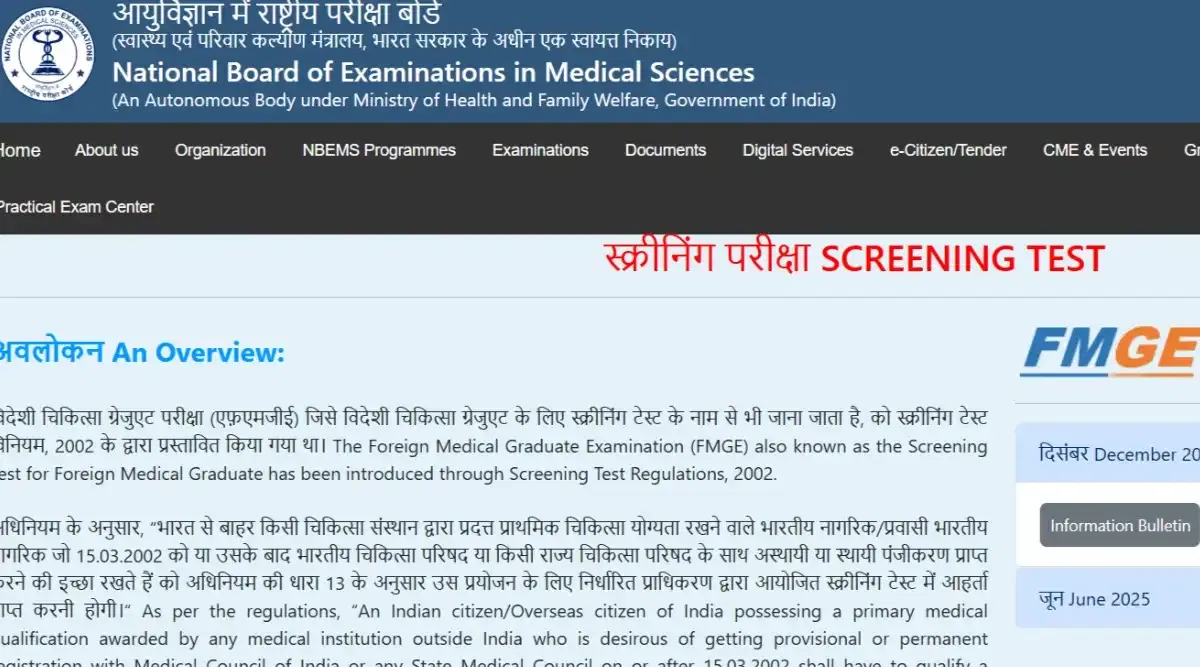
FMGE Subject Weightage 2025 contains the distribution of questions across different courses. FMGE 2025 is a national-level medical examination conducted by NBE to provide permanent or provisional registration from the Medical Council of India (MCI) to Indian and overseas candidates. FMGE contains three subjects: Preclinical, Paraclinical, and Clinical.
FMGE Weightage 2025 contains 300 questions and is conducted in 2 sessions. Candidates need to clear each session in order to become qualified. Candidates need to check the FMGE 2025 weightage to understand the FMGE Exam Pattern and questions.
FMGE subject weightage includes Anatomy, Physiology, Microbiology, Gynaecology, etc. Questions that have high weight will be asked.
Download: FMGE 2024 Question Paper
FMGE 2025 Subject Wise Weightage
Candidates need to check how each subject contributes to the maximum score. The chapter-wise weightage of FMGE 2025 gives an overall idea about the topics and syllabus which are important.
The subject-wise weightage of FMGE 2025 contains two parts: Part A and Part B. Part A contains Preclinical and Paraclinical subjects with 100 marks ,and Part B contains Clinical subjects with 200 marks.
Candidates can refer to the table below to know the weightage of subjects in FMGE 2025.
| Section | Subjects | FMGE Subject Wise Marks |
| Pre and Paraclinical Subjects | Anatomy | 17 |
| Physiology | 17 | |
| Biochemistry | 17 | |
| Pathology | 13 | |
| Microbiology | 13 | |
| Pharmacology | 13 | |
| Forensic Medicine | 10 | |
| Clinical Subjects | Medicine | 33 |
| Medicine and allied subjects | Psychiatry | 5 |
| Dermatology and STD | 5 | |
| Radiotherapy | 5 | |
| General Surgery and Allied Subjects | General Surgery | 32 |
| Anesthesiology | 5 | |
| Orthopedics | 5 | |
| Paediatrics | 15 | |
| Ophthalmology | 15 | |
| Otolaryngology | 15 | |
| Obstetrics and Gynaecology | 30 | |
| Community Medicine | 30 | |
| Radiodiagonistics | 5 |
Also Download: FMGE Previous Year Question Papers
FMGE 2025 Weightage: Overall Exam Pattern
FMGE is a computer-based examination that consists of 300 MCQ-type questions. The question of FMGE is separated into two parts: Part A and Part B. Candidates need to prepare the FMGE chapter-wise weightage 2025 for better understanding and clarity of the FMGE 2025 examination.
To understand the FMGE subject weightage, candidates can refer below.
| Exam Conducting Body | National Board of Education (NBE) |
| Periodicity | Two times a year |
| Mode of FMGE exam | Computer-based test |
| Medium of exam | English |
| Number of section | Part A and Part B |
| Type of questions | Objective type |
| Total questions | 300 multiple-choice questions |
| Time allotted | 2 hours, 30 minutes for each part |
| Syllabus | Based on the MBBS curriculum |
| Qualifying marks | 150 marks out of 300 |
| Total Marks | 300 |
FMGE Weightage 2025: Syllabus
The syllabus of FMGE 2025 for both parts is set by the exam conducting body, NBE. Part A and Part B contain numerous chapters, and each subject carries a different chapter-wise weightage of FMGE 2025.
The FMGE Syllabus 2025 contains important topics which candidates need to follow. Aspirants can refer to the FMGE 2025 Syllabus for Part A and Part B; both papers comprise multiple chapters, which are listed below.
Pre-Clinical Topics
Pre-clinical contains three topics: physiology, Anatomy, and Biochemistry. Candidates can refer to the tabulated data below for the topics on Pre-clinical:
Physiology
Physiology is an essential subject which deals with normal body functioning and living organisms. Here are the detailed topics mentioned below.
- Special senses
- Respiratory system
- Central nervous systems
- Cardiovascular system
- Endocrine glands
- Reproduction
- Kidney
- Skin and body temperature
- Nerve and muscle
- Gastrointestinal tract
- General physiology
- Body fluids – blood
Anatomy
Anatomy contains the structure of the human body. Its main focus is to understand the structure of vital organs, such as organs, tissues, muscles, etc. Here are the detailed topics mentioned below.
- General anatomy
- Sectional anatomy (Thorax, Head, Abdomen, Brain, and Neck)
- Surface anatomy
- Regional anatomy (Upper and lower limb, diaphragm, Abdomen, Pelvis, Neck, Head, Brain and Spinal Cord)
- Elements of anatomy (Osteology, Myology, Neurology, Arthrology, Angiology)
- Human genetics
- Histology (Microanatomy of different organs & systems)
- Radiological anatomy (Special X-rays, Skiagrams, Rules of imaging techniques)
- Embryology (Development of organs and systems, postnatal developments)
Biochemistry
Biochemistry teaches the chemical processes in the human body. Candidates can refer to the topics of biochemistry below.
- Nutrition
- Energy metabolism
- Tissue biochemistry
- Liver functions
- Protein biosynthesis and biochemical genetics
- Amino acid and protein metabolism
- Pyrimidine and purine metabolism
- Lipid metabolism
- Intermediary metabolism
- Carbohydrate metabolism
- Biological oxidation
- Digestion and absorption from GI tract
- Enzymes
- Carbohydrates
- Vitamins
- Minerals
- Nuclear acids
- Lipids
- Proteins, peptides, and amino acids
- Isotopes and their applications
- Cell and subcellular structures
- Hydrogen ion concentration (Acid, Bases, Buffers)
Para-Clinical Topics
Para-Clinical includes 5 topics such as Forensic Medicine, Microbiology, Pharmacology, Pathology, and Forensic and Preventive Medicine. Candidates can refer to the data below for the topics on Para-clinical:
Forensic Medicine
Forensic medicine covers the topic of medical knowledge in the field of investigation and criminal emergencies. Candidates can refer to the topics of forensic medicine below.
- Death
- Dowry death
- Asphyxial death
- Changes after death
- Medical certifications and medico-legal reports
- Medico-legal autopsies
- Medical jurisprudence
- Inquest by police
- Examination of mutilated human remains
- Examination of an Injury Case
- Death due to malnutrition, neglect, battered babies
- Virginity, sexual offences, sexual perversions
- Infanticide
- Mechanical injuries and wounds
- Pregnancy and delivery
- Biological fluids
- Legitimacy
- Seminal stains
- Forensic psychiatry
- Toxicology
Microbiology
Microbiology deals with microorganisms, such as algae, viruses, bacteria, etc. and their characteristics in causing illnesses. Aspirants can refer to the topics of microbiology below.
- General Microbiology
- Clinical Microbiology
- Mycology
- Parasitology
- General virology
- Systemic virology
- Bacteriology
- Immunology
Pathology
Pathology deals with various aspects of the human body and the causes of diseases. Aspirants can refer to the topics of pathology below.
- Ocular pathology
- Neuropathology
- Dermato-pathology
- Musculoskeletal system
- Endocrine pathology
- Reproductive system
- Diseases of the breast
- Cardiovascular pathology
- Hepat-biliary pathology
- Lymphoreticular system
- Haematology
- Pathology of the kidney and urinary tract
- Respiratory pathology
- Nutritional disorders
- Genetic disorder
- Circulatory disturbances
- Neoplasia and growth disturbances
- Immunopathology
- Infectious diseases
- Inflammation and repair
- Cell injury
Pharmacology
Pharmacology deals with medicines and the use of drugs in treating illnesses. Aspirants can refer to the topics in pharmacology below.
- Use of Clinical Pharmacology and Rational Drug
- Chemotherapy
- Toxicology
- Psychopharmacology
- Drugs in anaesthetic practice
- Endocrine pharmacology
- Central Nervous System
- Respiratory system
- Gastrointestinal system
- Drugs affecting the blood
- Autocoids and related drugs
- Cardiovascular system
- Diuretics
- General pharmacology
Clinical Topics
Clinical subject is the main subject, which contains 8 topics such as medicine, dermatology, surgery, anaesthesia, orthopaedics, ENT, radiodiagnosis, and ophthalmology. Candidates can refer below for the topics of Clinical subjects.
Medicine
Medicine deals with drugs and the treatment and diagnosis of the human body. Here are the detailed topics contained in medicine.
- Geriatrics
- Nephrology and urinary system
- Endocrine system
- Emergency medicine
- Neurological system
- Cardiovascular system
- Gastrointestinal tract
- Haematology
- Respiratory system
- Exposure to chemical and physical agents
- Infections
- Clinical methods used in the practice of medicine
- Common symptoms and diseases
Dermatology
Dermatology covers skin-related diseases and their treatments. Here are the detailed topics mentioned in dermatology.
- Lichen planus
- Diseases caused by nutritional and atmospheric factors
- Dermatological therapy
- Allergic disorders
- Infective disorders
- Melanocytes and other disorders
- Pigment metabolism
- Structure and functions of sebaceous glands
- Dermatitis and eczema
- Vesiculobullous diseases
- Alopecia and hirsutism
- STD
- Leprosy
- Psoriasis
Anesthesia
This subject deals with drugs used for temporary loss and consciousness in patients. Here are the detailed topics in Anaesthesia
- Role of an anaesthesiologist in chronic and acute relief
- Poisoning
- Local anaesthesia
- Sites of respiratory obstruction in unconscious patients
- Management of the airway in unconscious patients
- ICU
- Shock
- Monitoring
- Blood transfusion and fluid electoral balance
- Muscle relaxants
- Cardiopulmonary resuscitation basics
- Use of simple ventilators
- IPPV, endotracheal intubations, etc.
Surgery
It is a very important aspect, as it covers diagnosis and surgical treatment of medical emergencies. Candidates can check the topics covered in Surgery.
- Skin tumours
- Wounds
- Burns and skin grafting
- Ulcers, cysts, sinuses and fistulae
- Venous diseases
- Umbilical granuloma, fistula, adenoma
- Diseases of muscle, tendons, bursae and fascia
- Breasts
- Face, gums, teeth, mouth, salivary glands, tongue, neck
- Genito-urinary system
- Cranio-cerebral injuries
- Urethra
- Urinary bladder
- Oesophagus, stomach and duodenum
- Vasectomy and recanalisation, etc.
Opthalmology
Ophthalmology covers problems related to the eyes and their treatment. Candidates can check out the topics covered in ophthalmology.
- Community ophthalmology
- Injuries
- Lids
- Ophthalmic surgery
- Refractive errors
- Retina
- Orbit
- Squint
- Optic nerve
- Glaucoma
- Lacrimal system
- Lens
- Uveal tract
- Cornea
- Sclera
- Basic sciences
- Conjunctive
Candidates can check FMGE Paper Analysis here.
FMGE 2025 Weightage: Marking Scheme
The exam conducting body, NBE, sets the marking scheme of FMGE. Candidates must check the marking scheme of each question. The marking criteria for the correct answer is 1 mark, and for the unattempted or incorrect answer, it is 0.
To understand the marking criteria, candidates can refer to the table below.
| Particulars | Marking Criteria |
| For the correct answer | +1 will be deducted |
| For an incorrect answer | No marks will be deducted |
| For an unattempted answer | No marks will be deducted |
Candidates can check FMGE Answer Key here.