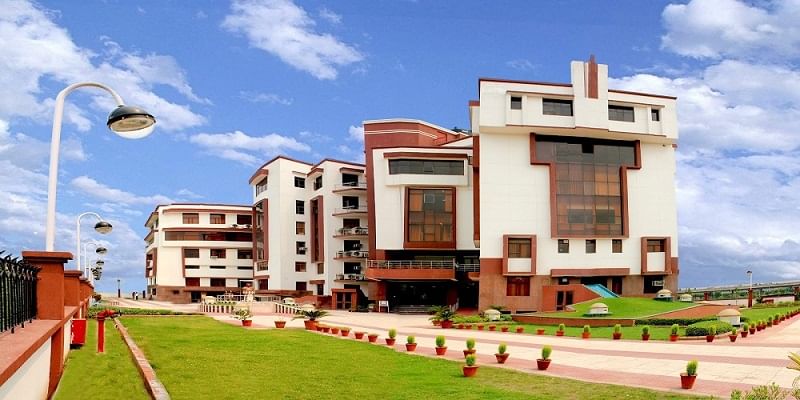
![Indira Gandhi National Open University, [IGNOU] New Delhi](https://media.getmyuni.com/azure/college-image/small/indira-gandhi-national-open-university-ignou-new-delhi.webp)
IGNOU CRDOL : Admission 2026, Fees, Eligibility, Syllabus, Last Date & How to Apply
- Delhi , Delhi NCR
- (124 Reviews)
- 3.3 (124 Reviews)

IGNOU Certificate in Rural Development (Online) Fees 2026
| Year | Tuition Fees | Total |
| 1st Year | ₹ 1,800/- | ₹ 1,800/- |
| Total Fees | ₹ 1,800/- | |
IGNOU Certificate in Rural Development (Online) Course Highlights 2026
| Course Name | certificate |
| Course Level | Certificate |
| Course Mode | Full Time |
| Course Duration | 6 Months |
| Accreditations | NAAC A++, NIRF |
The Certificate in Rural Development (Online) from Indira Gandhi National Open University (IGNOU) is a UGC-recognized, affordable, and flexible 6-month certificate program (extendable up to 2 years). Delivered entirely in online mode, this course is well-suited for working professionals, homemakers, and learners across India.
With IGNOU’s wide alumni network, career relevance in NGOs, government schemes, and rural development projects, the program is one of the most popular online rural development courses in India.
IGNOU CRDOL 2026: Key Highlights
| Particular | Details |
|---|---|
| Programme Name | Certificate in Rural Development (Online) |
| Programme Code | CRDOL |
| Duration | Minimum: 6 months; Maximum: 2 years |
| Programme Mode | Online |
| Medium | English |
| Eligibility | 10+2 or equivalent, or BPP from IGNOU |
| Admission Criteria | Direct, merit-based (no entrance exam) |
| Admission Session | January & July |
| Fee | ₹1,800 (full programme) + Registration & Development Fee |
| Mode of Exam | Term-end |
| Application Portals | ODL Mode / Online Mode |
IGNOU CRDOL Eligibility Criteria 2026
-
Educational Qualification: 10+2 or equivalent, or BPP from IGNOU
-
Minimum Marks: No minimum percentage required
-
Age Limit: No restriction
-
Entrance Exam: Not required
IGNOU CRDOL Admission Process 2026
IGNOU offers direct admission (no entrance exam) for the Certificate in Rural Development (Online). Admission is held twice a year (January & July sessions).
Steps to Apply Online
-
Review Programme Details
-
Check eligibility, fees, syllabus, and duration.
-
Download the IGNOU Common Prospectus for rules and policies.
-
-
Register on IGNOU Samarth Portal
-
Create a new account with username, password, mobile number, and email.
-
Already registered? Log in with existing credentials.
-
-
Upload Documents (scanned originals only):
Document Format Size Passport-size Photo JPG/JPEG 100 KB Signature JPG/JPEG 100 KB Certificates PDF/JPG/JPEG 200 KB Category/Experience Certificate (if applicable) PDF/JPG/JPEG 200 KB -
Fill & Submit Application Form
-
Enter personal, academic, and communication details.
-
Upload documents in required format.
-
Review and submit.
-
-
Pay Programme Fee
-
Pay via Credit/Debit Card or Net Banking.
-
Registration fee is non-refundable.
-
Tip: Apply early (July–August) to avoid last-minute portal slowdowns.
Check : IGNOU Admission 2026
Fee Structure 2026
| Fee Component | Amount (₹) | Frequency |
|---|---|---|
| Registration Fee | 300 | One-time |
| Programme Fee | 1,800 | One-time |
| Exam Fee | 200 | Per exam |
Check : IGNOU Courses & Fee
Syllabus & Course Structure 2026
The IGNOU CRDOL syllabus totals 16 credits across two core courses, with emphasis on rural development concepts, policies, and programmes.
| Duration | Subjects |
|---|---|
| 6 Months | ORDE-001: Rural Development – Indian Context ORDE-002: Rural Development Programmes |
Key focus areas:
-
Rural social & economic structures
-
Government policies & schemes
-
Sustainable development & technology in rural settings
Career Opportunities After CRDOL 2026
Graduates of IGNOU’s Certificate in Rural Development (Online) can explore:
-
Job Roles: Rural Development Officer, NGO Coordinator, Community Development Worker, Project Assistant (Govt. Schemes)
-
Average Salary: ₹2–4 LPA (entry level); up to ₹8 LPA in senior NGO/government roles
-
Top Recruiters: NGOs (PRADAN, SEWA), Government Rural Departments, Agricultural Cooperatives, UNDP & international agencies
FAQs – IGNOU Certificate in Rural Development (Online) 2026
Q1. What is the eligibility?
10+2 or equivalent, or BPP from IGNOU. No minimum marks or age limit.
Q2. What is the last date to apply for July 2026 session?
September 30, 2026 (extended).
Q3. Is there an entrance exam?
No. Admission is direct and merit-based.
Q4. Can I do this while working?
Yes. The online mode is flexible with self-study material and no mandatory attendance.
Q5. What is the fee?
₹1,800 for the programme + registration & exam fees.
Q6. What subjects are covered?
-
ORDE-001: Rural Development – Indian Context
-
ORDE-002: Rural Development Programmes
Q7. What careers can I pursue?
Roles in NGOs, government schemes, rural development projects, or further higher studies.