
Explore top M.Sc Biotechnology colleges in Lucknow, UP. Compare CU-UP, Amity, Integral and BBAU on eligibility, exams and careers.
Table of Contents
Biotechnology often works quietly in the background of everyday life. A new vaccine is developed. A crop survives a tough season. A blood test catches a problem early. Behind each of these results is a person who learned how living systems work at the molecular level and used that knowledge well. Choosing the right college to build this skill is as important as choosing biotechnology as a subject. The field is growing fast in India. According to IBEF, India's biotechnology market is worth about USD 37.1 billion in 2025 and may reach USD 112.2 billion by 2034, growing at 13.09 percent a year. The country's bioeconomy has crossed USD 195.3 billion, and India now has over 11,000 biotech startups. With nearly half of the population under 25, the sector has room for many new professionals. Students in Lucknow and nearby areas can choose from a central university, established private universities and newer campuses with a research focus. This article lists the top colleges for M.Sc Biotechnology, starting with Chandigarh University, Uttar Pradesh (CU-UP), whose program is designed around where biotechnology is heading.
M.Sc Biotechnology in Lucknow: Quick Overview
| Parameter | Details |
|---|---|
| Duration | 2 years (postgraduate) |
| Core Subjects | Molecular Biology, Genetic Engineering, Bioprocess Technology, Bioinformatics, Genomics |
| Best Private University | Chandigarh University, Uttar Pradesh (CU-UP), Unnao |
| Other Private Options | Amity University Lucknow, Integral University Lucknow |
| Best Government University | Babasaheb Bhimrao Ambedkar University (BBAU), Lucknow |
| Entrance Exams | CUCET (CU-UP), CUET-PG (BBAU), university-level tests (Amity, Integral) |
| Basic Eligibility | Bachelor's degree in Life Sciences, Biotechnology, Microbiology or a related subject, with around 50% marks |
| Career Roles | R&D Scientist, Bioprocess Technologist, Clinical Research Associate, Regulatory Affairs Specialist, Academic Researcher |
Quick List: Top M.Sc Biotechnology Colleges in Lucknow UP
Private Universities
- Chandigarh University, Uttar Pradesh (CU-UP): A research-focused, AI-integrated program with international collaborations and a Career Development Cell that supports students throughout the course.
- Amity University, Lucknow: A well-known biotechnology institute with a clear semester-wise structure.
- Integral University, Lucknow: An established private university with a lab-focused biotechnology program.
Government University
- Babasaheb Bhimrao Ambedkar University (BBAU), Lucknow: A NAAC A+ central university with one of the most affordable M.Sc Biotechnology programs in India.
What Is an M.Sc Biotechnology Degree?
M.Sc Biotechnology is a two-year postgraduate degree. It teaches students how to use living organisms and biological systems to solve problems in medicine, farming, industry and environmental protection. The syllabus usually covers molecular biology, genetic engineering, bioprocess technology, genomics and bioinformatics. Lab work is a big part of the course, because biotechnology is learned by doing and not only by reading. After the course, graduates can work in research, take up jobs in biotech and pharma companies, or continue their studies through exams such as CSIR-NET, DBT-NET and GATE.
Admission Process and Eligibility
The steps differ slightly from one college to another, but the overall process is similar.
- Basic Eligibility: A bachelor's degree in Biotechnology, Life Sciences, Microbiology, Biochemistry or a related subject. Most colleges ask for around 50 percent marks, and reserved categories usually get some relaxation.
- Entrance Exams: Government universities such as BBAU accept CUET-PG scores. Private universities usually hold their own tests. CU-UP admits students through CUCET, while Amity and Integral follow their own admission processes.
- After the Entrance Test: Most colleges verify documents after the test. Some also hold a short interview before confirming the seat.
- Scholarships: Many private universities give scholarships based on entrance exam scores. Several government institutions also reduce fees for reserved-category students.
Why Choose a Career in Biotechnology?
Biotechnology was once seen as a field only for people planning to do a PhD. That is no longer true. Today, it covers biopharmaceuticals, agriculture, diagnostics, environmental science and industrial production. The government is also supporting the sector. The Union Budget 2026-27 introduced the Biopharma SHAKTI initiative, which sets aside close to USD 1.2 billion over five years to strengthen India's biologics and biosimilars base. India also has more USFDA-compliant manufacturing plants than any country outside the US, and homegrown CAR-T cell and gene therapies are now reaching patients. A student who studies in a program where research and industry exposure run together starts their career with a clear advantage. A good M.Sc Biotechnology program is designed to give exactly that.
Questions to Ask Before Choosing a College
Look beyond the brochure and ask these questions before you decide. How good is the lab setup?
Are well-equipped labs available from the first semester, or is hands-on work limited? Is the research exposure real?
Does the university have genuine international research ties and named industry partners? Who teaches the course?
Is there a dedicated, research-active biotechnology faculty, or are students taught by general science teachers? How strong is the career support?
Does the college offer resume workshops, mock interviews and direct contact with recruiters? Does the fee match the value?
Is the fee reasonable for the labs, faculty and placement support offered?
Top Colleges for M.Sc Biotechnology in Lucknow: A Closer Look
1. Chandigarh University, Uttar Pradesh (CU-UP)
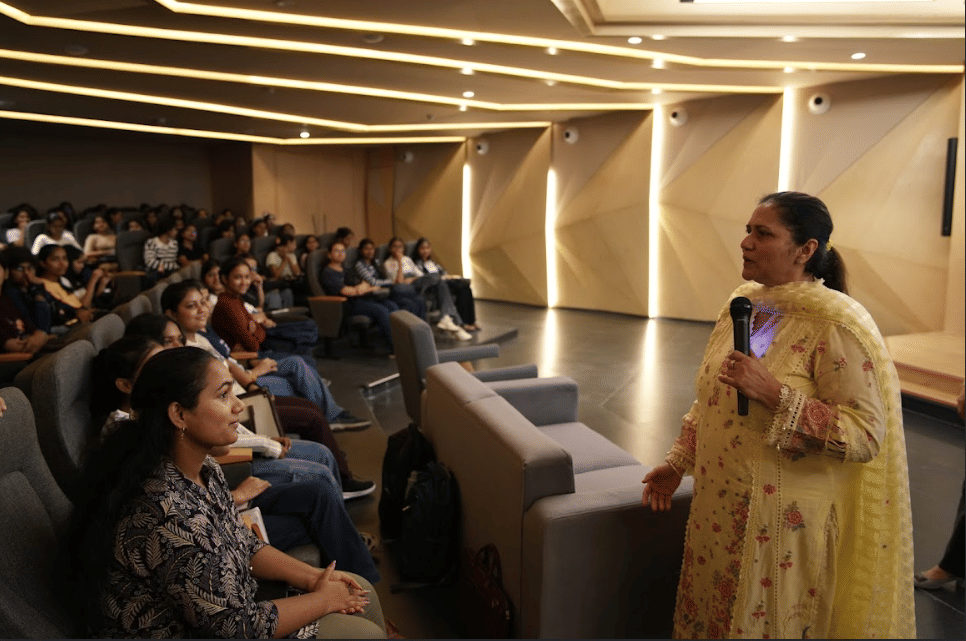
CU-UP offers M.Sc Biotechnology as a research-first postgraduate degree. The program is designed for a field that connects agriculture, healthcare, environmental science and industrial manufacturing. The two-year, AI-integrated syllabus covers genomics, molecular biology, bioprocess technology and bioinformatics. It is supported by strong lab training and applied research. International exchange tie-ups show students how biotech research works outside India and keep their learning connected to global practice. Industry exposure is part of the program from the start. Students attend masterclasses led by industry professionals, do internships with startups and companies in food, pharma, nanotechnology and agro-industries, and join certification workshops on molecular and bioinformatics tools. The Career Development Cell works with students from the early stages of the course. It conducts resume workshops and mock interviews and connects students with recruiters, instead of waiting for the final semester. Scholarships are given on the basis of CUCET scores and can reduce tuition fees substantially. What Makes CU-UP a Good Choice for M.Sc Biotechnology?
| Key Highlights | Details |
|---|---|
| Curriculum and Approvals | UGC-approved, interdisciplinary and built around AI integration |
| Research Ties | International research partnerships with access to global experts |
| Industry Exposure | Internships, live projects and masterclasses across food, pharma, nanotech, agro-industries and more |
| Entrepreneurial Training | Focus on business thinking along with scientific skills |
| Career Guidance | A dedicated Career Development Cell offering resume support, mock interviews and recruiter access |
| Ethics and Sustainability | Coursework built around responsible and sustainable biotechnology practice |
| How to Apply | CUCET (Chandigarh University Common Entrance Test) |
| Scholarship | Merit scholarships from partial waivers up to a full tuition waiver, based on CUCET score |
Career Roles After M.Sc Biotechnology: Graduates can work in several areas:
- R&D, quality control and production
- Drug discovery, clinical research and product development in pharma
- Research and teaching
- Agricultural and environmental biotechnology
- Diagnostics, vaccines and biopharmaceutical development
- Regulatory affairs and bioethics
Average packages for M.Sc Biotechnology graduates range from INR 4-6 LPA. Top packages can reach INR 10-12 LPA, depending on the role and the employer.
2. Amity University, Lucknow
The Amity Institute of Biotechnology runs its M.Sc program in a well-organised, semester-wise format. The course covers advanced molecular biology, advanced genetics, bioprocess technology and regulatory affairs. Students need a graduation in Life Sciences to apply, and the course follows the standard two-year format.
3. Integral University, Lucknow
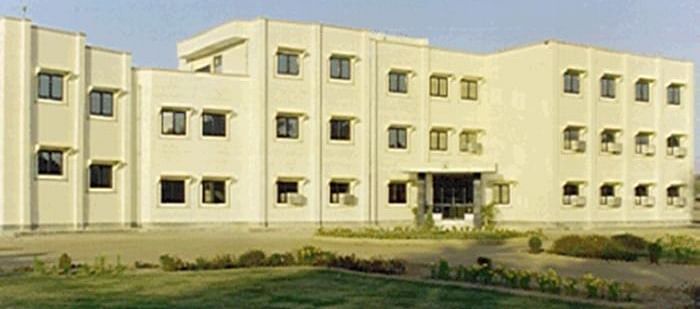
Integral University offers M.Sc. Biotechnology as one of its postgraduate science programs. The course covers core biotechnology topics along with practical lab work. It is an established private university in the city and has its own entrance and eligibility process. Students should check the latest fee structure and admission details with the university's admission office.
4. Babasaheb Bhimrao Ambedkar University (BBAU), Lucknow
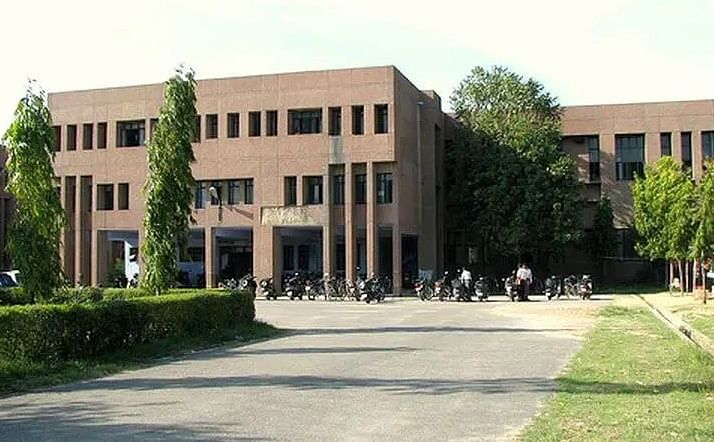
BBAU is a central university with a NAAC A+ rating. Its M.Sc Biotechnology program is one of the most affordable postgraduate biotechnology options in the country. Admission is through CUET-PG. Graduates in Life Sciences, Biotechnology, Microbiology, Biochemistry and related fields can apply. The minimum eligibility is 50 percent marks (40 percent for SC/ST/PwD candidates).
Side-by-Side Comparison
| College | Type | Main Focus | Best For |
|---|---|---|---|
| Chandigarh University, UP | Private | AI-integrated syllabus, international research links, Career Development Cell | Students who want research depth along with industry connections |
| Amity University, Lucknow | Private | Structured, semester-wise coursework | Students who prefer a clear and predictable curriculum |
| Integral University, Lucknow | Private | Core biotechnology training with lab practice | Students looking for an established private university |
| BBAU, Lucknow | Government | Central university research environment | Students who want a strong, low-cost government option |
Eligibility and Entrance Exams at a Glance
| Parameter | Details |
|---|---|
| Minimum Qualification | Bachelor's degree in Biotechnology, Life Sciences, Microbiology, Biochemistry or an allied field |
| Minimum Marks | Around 50% aggregate (relaxation for reserved categories, depending on the institution) |
| Government Entrance Route | CUET-PG |
| Private Entrance Routes | CUCET (CU-UP), individual entrance tests at Amity and Integral |
Frequently Asked Questions
Admission
What is the M.Sc Biotechnology program and what does it offer?
M.Sc Biotechnology is a two-year postgraduate degree that combines advanced theory with hands-on research training. The syllabus focuses on molecular biology, genetic engineering and industrial biotechnology. Research and industry exposure continue throughout the whole course. What is the eligibility for admission in M.Sc Biotechnology?
Candidates need a bachelor's degree in Biotechnology, Life Sciences, Microbiology or a related subject with about 50 percent marks. Most institutions offer relaxation to reserved categories. How can I get admission in an M.Sc Biotechnology program?
Government institutes such as BBAU accept CUET-PG scores. Private universities follow their own process. At CU-UP, candidates register, fill in the application form and are shortlisted based on CUCET scores. Counselling and document verification follow. What scholarships are available for M.Sc Biotechnology students?
Many private universities offer merit scholarships based on entrance exam performance. At CU-UP, CUCET scores can earn scholarships covering up to 100 percent of tuition, and no separate application is needed for the scholarship.
Learning and Skills
What practical learning opportunities does the program offer?
Well-equipped biotech labs are usually available from the first semester. Live research work, industry visits and faculty-guided projects continue through the course and are not left for the end. Are internships included in an M.Sc Biotechnology program?
Yes, good programs include internships with biotech and pharma companies. These give students industry experience that cannot be gained in the classroom. What skills will students gain?
Students build skills in molecular biology techniques, genetic engineering and lab-based research methods, and strengthen them through live projects. Programs with an entrepreneurial focus, such as CU-UP, also build business thinking that suits the growing biotech startup scene. What makes the M.Sc Biotechnology at Chandigarh University, Uttar Pradesh different from other universities?
Many biotechnology programs depend mainly on lectures and written exams. CU-UP builds its course around lab work, research projects and direct contact with industry. Graduates come out with practical skills that go beyond what a transcript shows.
Placements and Careers
Does Chandigarh University, Uttar Pradesh offer placement support for M.Sc Biotechnology students?
Yes, the Career Development Cell at CU-UP offers structured placement support throughout the course. This includes resume workshops, mock interviews and links with recruiting companies in biotech and pharma. What are the career opportunities after M.Sc Biotechnology?
Graduates can work in research and development, pharmaceutical companies, biotech startups, clinical research, food technology and government research institutions. These roles span agriculture, healthcare, environmental science and industrial biotechnology. What is the average salary after M.Sc Biotechnology?
Average packages are generally between INR 4-6 LPA. The best offers can reach INR 10-12 LPA, depending on the role and the employer. Which companies hire M.Sc Biotechnology graduates?
Common recruiters include Biocon, Panacea Biotec, Dr. Reddy's Laboratories, Sun Pharma and Syngene. They hire across research, manufacturing and clinical work. What are the highest-paying jobs after M.Sc Biotechnology?
Senior research scientist roles, biotech consultancy positions and specialised pharma R&D jobs are usually at the top of the pay scale. Pay depends largely on specialisation and research experience.
Conclusion
Every important advance in biotechnology begins in a lab, with someone who is ready to repeat an experiment until it works. Lucknow gives students real choices to become that person: BBAU as an affordable central university option, Amity and Integral as dependable private universities, and Chandigarh University, Uttar Pradesh as a research-first, industry-connected program that treats lab work and career readiness as one process from day one. India's biotechnology sector is growing quickly and needs graduates who can work confidently at both the research bench and the business table. The M.Sc Biotechnology program at CU-UP is designed for exactly that kind of graduate. Apply now at www.culko.in and register for CUCET. The next breakthrough in biotechnology starts with the right education, and it can start here.

















































POST YOUR COMMENT