IIT JAM Chemistry chapter-wise weightage 2026 includes chapter such as Chemical Thermodynamics, Basic Concept of Organic Chemistry and Stereochemistry, Chemical Bonding and Shapes of Compounds and Transition Metals (d-block).
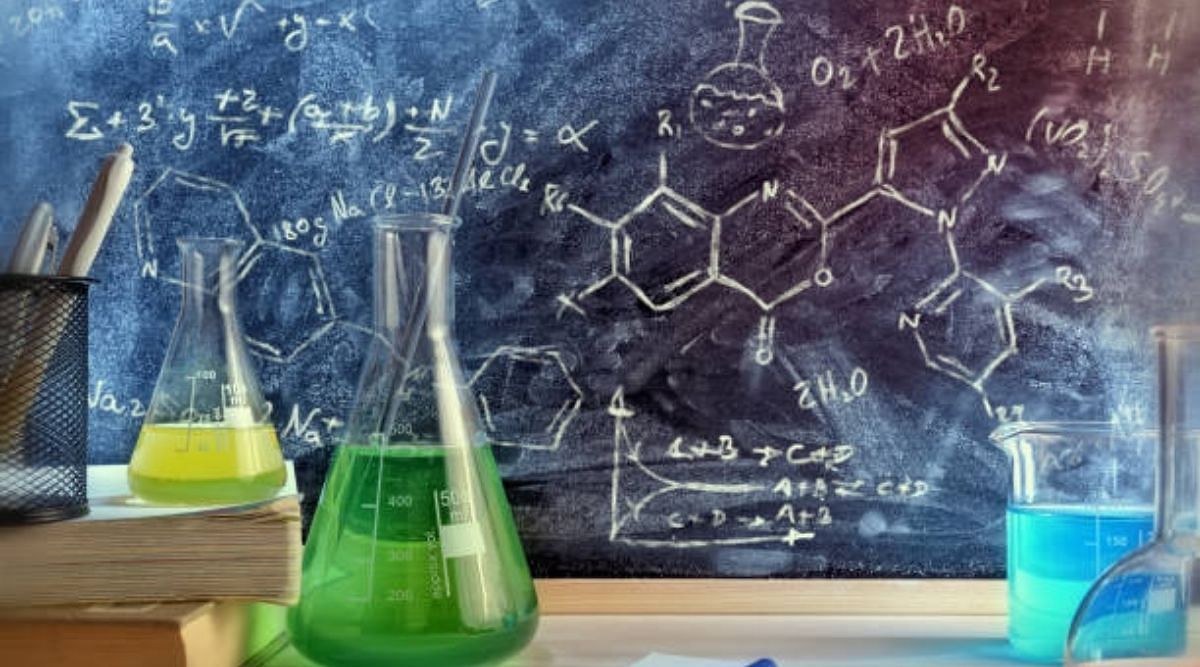
Table of Contents
The IIT JAM Chemistry exam 2026 follows a well-defined syllabus, but understanding the chapter-wise weightage is crucial if you want to prepare strategically and score well. Over the years, analysis of previous question papers shows that topics such as Physical Chemistry (especially Thermodynamics, Chemical Kinetics, and Quantum Chemistry) and Organic Chemistry (Reaction Mechanism, Stereochemistry, and Named Reactions) carry a significant portion of the paper.
On average, Physical Chemistry contributes around 30–35%, Organic Chemistry about 35–40%, and Inorganic Chemistry roughly 25–30% of the total questions. Moreover, knowing the syllabus is important, and knowing the IIT JAM chapter-wise weightage is necessary for preparation. The IIT JAM chemistry chapter-wise preparation is vital as it is divided into physical chemistry, organic chemistry, and inorganic chemistry.
IITs conduct IIT JAM 2026 for admissions into various post-graduate programs. Therefore, candidates who have completed their graduation and satisfy the eligibility criteria for admissions can apply for the exam.
IIT JAM Chemistry Chapter-Wise Weightage 2026
The chapter-wise weightage for IIT JAM chemistry is vital for the preparation for the exam. Further, the distribution of weightage will help the candidates to evaluate their focus on the areas with high weightage.
Besides, it will also encourage the candidates to concentrate on their weaknesses. Therefore, the IIT JAM chemistry chapter-wise weightage is as follows:
| Topics | Syllabus | Weightage |
| Physical Chemistry | Chemical Thermodynamics | 6 |
| Electrochemistry | 5 | |
| Basic Mathematical Concepts | 5 | |
| Atomic and Molecular Structure | 4 | |
| Organic Chemistry | Basic Concept of Organic Chemistry and Stereochemistry | 13 |
| Organic Reaction Mechanism and Synthetic Application | 12 | |
| Qualitative Organic Analysis /Spectroscopy | 5 | |
| Natural Products Chemistry | 5 | |
| Inorganic Chemistry | Transition metals (d-block) | 9 |
| Chemical Bonding and Shapes of Compounds | 6 | |
| Analytical Chemistry | 5 | |
| Main Group Elements (s and p blocks) | 4 |
Also Check: IIT JAM Chemistry Syllabus 2026
IIT JAM Syllabus and Exam Pattern
The IIT JAM Syllabus 2026 is quite extensive. As this is a highly competitive examination, the competition is expected to be neck to neck. Therefore, knowing the syllabus is mandatory.
Physical Chemistry
This section mainly carries topics from atomic and molecular structure, gaseous, liquid, solid state, chemical thermodynamics, chemical and phase equilibria, electrochemistry, chemical kinetics, adsorption, and spectroscopy. The elaborate topic-wise syllabus is mentioned below:
- Basic Mathematical Concepts
- Atomic and Molecular Structure
- Gaseous State
- Liquid State
- Solid State
- Chemical Thermodynamics
- Chemical and Phase Equilibria
- Electrochemistry
- Chemical Kinetics
- Adsorption
- Spectroscopy
Organic Chemistry
This section contains topics from basic concepts in organic chemistry and stereochemistry, organic reaction mechanism and synthetic applications, qualitative organic analysis, natural products chemistry, aromatic and heterocyclic chemistry. The topics are as discussed below:
- Basic Concepts in Organic Chemistry and Stereochemistry
- Organic Reaction Mechanism and Synthetic Applications
- Qualitative Organic Analysis
- Natural Products Chemistry
- Aromatic and Heterocyclic Chemistry
Inorganic Chemistry
The inorganic chemistry syllabus consists of topics from the periodic table, extractions of metals, chemical bonding and shapes of molecules, main group elements (s and p blocks), transition metals (d block), bioinorganic chemistry, instrumental methods of analysis, and analytical chemistry. Follow the table beneath:
- Aromatic and Heterocyclic Chemistry
- Main Group Elements (s and p blocks)
- Transition Metals (d block)
- Instrumental Methods of Analysis
- Bioinorganic Chemistry
- Periodic Table
- Extractions of Metals
- Analytical Chemistry
IIT JAM Exam Pattern 2026
The IIT JAM exam pattern 2026 is as follows. Candidates need to register themself in JOAPS to apply for the examination. Besides, the application form is released in an online format. Therefore, candidates are recommended to check the dates and apply accordingly.
| Full Form | Indian Institute of Technology Joint Entrance Examination |
| Conducted By | Indian Institute Of Science |
| Mode of Examination | Online |
| Duration of Examination | 180 minutes |
| Exam Type | National-Level Examination |
| Mode of Application | Online |
| Medium of Answering | English |
| Subjects |
Biotechnology (BL) |
| Geology (GG) | |
| Chemistry (CY) | |
| Economics (EN) | |
| Mathematics (MA) | |
| Mathematical Statistics (MS) | |
| Physics (PH) | |
| Question Pattern |
Objective Multiple Choice Questions (MCQ) |
| Multiple Select Questions (MSQ) | |
| Numerical Answer Type (NAT) | |
| Total Question | 60 |
| Total Marks | 100 |
IIT JAM Preparation Tips 2026
IIT JAM needs proper preparation and hard work to succeed. The examination is quite difficult to crack; hence, there should be a definite approach for the examination.
- Check the Syllabus: The foremost step is to go through the complete syllabus while determining to arrive for IIT JAM. The syllabus covers topics from physics, chemistry, mathematics, biotechnology, mathematical statistics, and biotechnology.
- Follow the Marking Pattern: The IIT JAM chapter-wise weightage for chemistry is mentioned above. Hence, candidates can easily understand the topics. Additionally, this will help in obtaining better results.
- Divide the Time: Time management performs an indispensable role in any examination. Therefore, candidates are recommended to study and practise the chapters with more weight. Completing the paper on time is fundamental.
- Practice for Mock Tests: To stand amidst the toppers and obtain a seat through IIT JAM, candidates must apply for as many mock tests as possible. These tests will provide an analysis of the exam preparation.
- Revise: Revision is compulsory. Candidates are encouraged to revise any chapter once it is finished. It will ensure that all the topics are covered and crammed.
Conclusion
A complete understanding of the IIT JAM Chemistry chapter-wise weightage 2026 enables you to plan your study in a smart and exam-oriented way. You can maximize your overall score by focusing more on the high-scoring topics from Physical and Organic Chemistry while making sure that the principles of Inorganic Chemistry are consistently covered. However, weighting alone is insufficient; regular problem-solving, solid conceptual clarity, and rewriting of frequently asked chapters are all as crucial. To increase your chances of getting a top score in IIT JAM 2026, use the weightage analysis as a guide rather than a shortcut and match it with practice exams and past year's question papers.



POST YOUR COMMENT