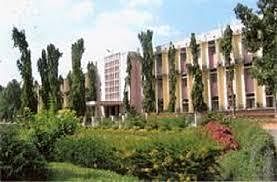
Sri Venkateswara University offers a vast array of over 100 UG, PG, Diploma, and Ph.D. programs across multiple streams. Sri Venkateswara University Fees range from approximately ₹10,900 for basic Arts courses to over ₹1,50,000 annually for self-financed professional programs like B.Tech. Significant Sri Venkateswara University Fee Structure variation exists between subsidized regular seats and higher self-financed options. This dual structure ensures accessibility, making Sri Venkateswara University Fees for Courses a highly affordable and valuable investment for quality higher education.
- Sri Venkateswara University Courses & Fees 2026 Highlights
- Sri Venkateswara University Courses 2026
- Sri Venkateswara University Fee Structure 2026
- Sri Venkateswara University Fees for Affiliated Colleges 2026
- Sri Venkateswara University Distance Education Courses & Fees 2026
- Sri Venkateswara University Hostel Fees 2026
- How to Pay Sri Venkateswara University Fees?
- Sri Venkateswara University Fee Refund & Cancellation Policy
Sri Venkateswara University Courses & Fees 2026 Highlights
Sri Venkateswara University (SVU) offers a comprehensive portfolio of over 100 programs in Arts, Science, Commerce, Engineering, and Management. Admissions for most courses are centralized via state-level common entrance tests like AP EAMCET (B.Tech), SVUCET (PG Science/Arts), and AP ICET (MBA/MCA). The Sri Venkateswara University (SVU) fee structure is given below:
| Courses | Fee Range | Admission Mode |
| BA, B.Sc, B.Tech (CSE) | ₹12,195 – ₹1,50,000 | AP EAMCET/Merit |
| M.Sc (Sciences), MBA, M.Tech | ₹12,195 – ₹1,54,940 | SVUCET/AP ICET/GATE |
| Diploma/Ph.D | Varies (₹16,000 – ₹62,000) | University Entrance/Interview |
Commonly Asked Questions
1. Is the SVU fee structure the same for all UG Science courses at SVU?
No, the fee structure is not uniform. While core B.Sc. programs (like B.Sc. BZC) have a similar, subsidized regular fee, the introduction of specialized and lab-heavy courses, particularly in self-financed categories (e.g., B.Sc. Biotechnology), involves a higher mandatory Maintenance Fee component, making their total annual cost substantially greater than traditional degrees.
2. Are there any one-time charges included in the First Year fees at Sri Venkateswara University?
Yes, the first-year fee for most programs includes several one-time charges not repeated in subsequent years. These typically comprise the Admission Fee, Registration Fee, and a refundable Lab Caution Deposit. Students should examine the detailed fee breakdown to identify these non-recurring, mandatory payments required for confirming admission.
3. What is the fee difference for EWS (Economically Weaker Section) category students?
The fee difference for EWS students primarily depends on state government fee reimbursement schemes (like Jnanabhumi in Andhra Pradesh). While the official university fee structure remains the same, eligible EWS candidates typically receive a full or partial refund of the tuition fee component, significantly reducing their net payment obligation after admission.
Sri Venkateswara University Courses 2026
Sri Venkateswara University (SVU) offers over 100 courses across diverse streams, including Arts, Science, Commerce, Engineering, Management, Law, and Pharmacy. Flagship programs include the highly-sought-after M.Sc. in Sciences, B.Tech., and MBA. Programs are offered under two main seat types: Regular (Subsidized) and Self-Financed (Higher Fee/Self-Supporting) seats, allowing for greater student intake across different affordability levels.
Undergraduate (UG) Courses & Fees
| Course Name | Duration | Total Fee |
| BA (Regular) | 3 Years | ₹12,195 |
| BSc (Regular - PCM/BZC) | 3 Years | ₹15,780 |
| BCom (Regular) | 3 Years | ₹15,780 |
| BTech (Regular/Subsidized) | 4 Years | ₹29,950 (First Year) |
| B.Pharm | 4 Years | ₹1,05,000 (Annual) |
| BCA (Self-Financed) | 3 Years | ₹18,000 – ₹20,000 (Annual Approx) |
| BA LLB | 5 Years | ₹55,000 (Annual) |
| LLB | 3 Years | ₹45,000 (Annual) |
Postgraduate (PG) & Professional Courses & Fees
| Course Name | Duration | Total Fee (2026) |
| MA(Arts/Social Science) | 2 Years | ₹12,195 |
| MSc (Sciences - General) | 2 Years | ₹21,925 |
| M.Com (Regular) | 2 Years | ₹15,780 |
| MBA (Master of Business Administration) | 2 Years | ₹27,555 (First Year) |
| MCA (Master of Computer Applications) | 2 Years | ₹60,000 (Annual) |
| MTech (Regular) | 2 Years | ₹37,820 – ₹40,990 (First Year) |
| M.Pharm | 2 Years | ₹1,05,000 (Annual) |
| M.Sc. Biotechnology (Self-Financed) | 2 Years | ₹72,925 (First Year approx.) |
Commonly Asked Questions
1. Does SVU offer any integrated courses, and what are their fees?
Yes, SVU offers integrated courses, notably the B.A. L.L.B. program. The annual fee for this five-year integrated course is approximately ₹55,000. These programs are designed for students seeking to combine undergraduate and professional studies into a seamless curriculum, leading to a degree in a reduced time frame.
2. Are the Sri Venkateswara University M.Tech fees consistent across all Engineering specializations?
No, M.Tech fees can vary slightly depending on the specific engineering specialization. While many regular M.Tech programs have a base fee (approx. ₹37,820 - ₹40,990 annually), specializations with higher laboratory requirements or those offered under self-financed schemes might have a higher overall fee.
3. What are the key eligibility requirements for the highly demanded M.Sc. programs at Sri Venkateswara University?
Key eligibility for M.Sc. programs is a B.Sc. degree in the relevant subject with a specified minimum percentage, and a valid score in the Sri Venkateswara University Common Entrance Test (SVUCET). For programs like M.Sc. Biotechnology, a B.Sc. in any life science or technology field is usually required, coupled with the mandatory entrance examination.
Sri Venkateswara University Fee Structure 2026
The Sri Venkateswara University (SVU) fee structure reflects a commitment to providing affordable, high-quality public education across its diverse programs, with fees varying significantly between regular and distance education modes. The detailed breakdown covers all mandatory charges, ensuring transparency for students enrolling in Arts, Science, Engineering, Law, and Management courses.
The total First Year Fee for Arts, LL.M., or M.Ed. programs is approximately ₹12,195. This amount primarily includes the Tuition Fee of ₹7,250 and is divided into ₹10,580 for the University Account (covering library, lab deposit, etc.) and ₹1,615 for the Principal Account (college charges). Key fees also include a refundable Lab Caution Deposit (₹550) and a Computer Lab Fee (₹550), with the total specifically excluding any Self-Finance Maintenance Fee.
| Fee Component | Amount (₹) |
| Tuition Fee | 7,250 |
| Admission Fee | 110 |
| Library Fee | 220 |
| Medical Inspection Fee | 165 |
| Extra Curricular Activity Fee | 275 |
| Lab Caution Deposit | 550 |
| Computer Lab Fee | 550 |
| Total University Account (Approx.) | 10,580 |
| Total Principal Account (Approx.) | 1,615 |
| Total Fee for I Year (Arts/LLM/M.Ed.) | 12,195 |
Commonly Asked Questions
1. Is the Lab Caution Deposit refundable, and when can a student claim it back?
Yes, the Lab Caution Deposit (approx. ₹550 for Arts, higher for Science/Engineering) is fully refundable. Students can typically claim this deposit back after successfully completing their program, provided there are no pending dues or damages to the laboratory equipment or university property.
2. How does the Self-Finance Maintenance Fee component apply to regular tuition?
The Self-Finance Maintenance Fee is an additional charge levied on top of the regular tuition and other fees for self-supporting courses. For example, an M.Sc. Biotechnology student would pay the regular M.Sc. fee (₹21,925) plus an additional maintenance fee of approximately ₹50,000, significantly increasing the total payable fee.
3. Are there any late fee penalties for delayed fee payment?
Yes, SVU strictly enforces late fee penalties for delayed payment of semester/annual fees. Typically, a fine of around ₹500 is levied for payments made up to 15 days after the due date. Failure to pay after a month from the deadline may require re-admission into the course by paying a Re-admission Fee (approx. ₹2,000).
Sri Venkateswara University Fees for Affiliated Colleges 2026
Fees in colleges affiliated with Sri Venkateswara University can vary significantly from the fees on the main university campus, especially for professional and self-financed courses. While the academic fees for traditional Aided seats may align with university standards, most affiliated colleges operate primarily on a Self-Financed (Unaided) model. This means their annual fee is governed by state-level Fee Regulatory Committees and is generally higher than the SVU campus's Regular/Subsidized fees.
Affiliated Colleges Popular Courses Annual Fees
| College Name (Example) | Popular Courses | Annual Fee |
| SVCE/SVCET (Affiliated B.Tech) | B.Tech (CSE, ECE, Civil) | ₹84,190 – ₹99,055 |
| Affiliated PG College 1 | M.Sc (Science) | ₹22,880 – ₹30,600 |
| Affiliated PG College 2 | MBA/MCA | ₹51,505 – ₹81,265 |
| Affiliated Arts/Science College | BA/B.Sc/B.Com | ₹12,000 – ₹71,950 (Course-dependent) |
-
Self-Financed vs. Regular Seats: Affiliated colleges largely offer self-financed seats, where the total fee is substantially higher due to the absence of the state-level subsidy available for regular/aided seats on the main university campus.
-
Aided vs. Unaided Fee Structure:Aided colleges might have a subsidized fee structure similar to the university for a limited number of seats, but Unaided colleges (most affiliated professional colleges) charge the higher, full-rate fee as determined by the Fee Fixation Committee.
-
Professional Program Fee Variation: Professional programs like B.Tech, MBA, and MCA in affiliated colleges have standardized government-mandated fees (approx. ₹51,505 to ₹99,055 annually), which are much higher than regular Arts/Science programs.
-
Faculty-Level Difference: Even within affiliated colleges, professional streams (Engineering, Management, Pharmacy) have a fixed, higher annual fee, whereas traditional Arts and basic Science streams maintain relatively lower fees, reflecting government tuition fee policies.
Commonly Asked Questions
1. Does my fee reimbursement apply if I study at an affiliated college?
Yes, government-sponsored fee reimbursement schemes, like those for SC/ST/BC categories, typically apply to affiliated colleges that admit students through the common entrance counseling process (e.g., AP EAMCET/ICET). However, eligibility criteria and the exact reimbursed amount are determined by the state government, not the college.
2. Are the Sri Venkateswara University total course fees for professional courses fixed annually?
The total course fees for professional courses like B.Tech and MBA in affiliated colleges are generally fixed annually by the state government's Fee Regulatory Committee (FRC) and not the university itself. The university only sets the fee for the limited seats on its main campus. These FRC-determined fees must be strictly adhered to by all affiliated institutions.
3. Why is the B.Sc. fee higher in some affiliated colleges than on the SVU campus?
The B.Sc. fee is higher in some affiliated colleges because they offer courses purely on a self-financed/unaided basis, often with modern lab facilities and infrastructure. The SVU campus offers many B.Sc. seats under the heavily subsidized regular/aided category, leading to a much lower net fee for students.
Sri Venkateswara University Distance Education Courses & Fees 2026
The Directorate of Distance Education (DDE), SVU, offers various programs to cater to working professionals and students who cannot pursue full-time education. These include UG, PG, and PG Diploma courses delivered through correspondence/distance mode. The DDE fee structure is considerably lower than regular full-time courses, making it highly affordable.
Distance Education (DDE) Fee Table
| Course Name | Duration | Total Fee (2026) - Annual (Approx.) |
| B.A. (Arts) | 3 Years | ₹7,000 – ₹8,000 |
| B.Com (General/CA) | 3 Years | ₹7,000 – ₹10,000 |
| M.A. (Arts/Social Science) | 2 Years | ₹7,000 – ₹12,000 |
| M.Sc. Mathematics | 2 Years | ₹8,000 |
| M.Sc. Chemistry/Physics/Botany | 2 Years | ₹28,500 – ₹30,500 |
| MBA | 2 Years | ₹11,500 – ₹12,000 (Annual) |
| PG Diploma (Industrial Relations) | 1 Year | ₹4,000 (Total) |
Commonly Asked Questions
1. Does DDE SVU offer any online-only degree programs?
Currently, DDE SVU primarily offers programs through the Correspondence/Distance mode which involves printed material and compulsory in-person Contact Programme Classes (CPCs). It does not predominantly offer pure online degrees, but registration and fee payment are entirely managed through an online portal.
2. Why are the M.Sc. Science SVU DDE fees higher than M.A. DDE fees?
The M.Sc. Science DDE fees are significantly higher than M.A. fees because they typically include charges for compulsory Practical/Lab components and extensive Contact Programme Classes (CPCs). Science programs often require physical lab sessions to complete the curriculum, which increases the total administrative and operational cost for the university.
3. Is there a registration fee separate from the annual course fee for SVU DDE?
Yes, there is usually a non-refundable Registration Fee (approx. ₹500 to ₹750) that must be paid at the time of submitting the application for admission to DDE courses. This is separate from the annual or total course academic fee and covers the application and administrative processing.
Sri Venkateswara University Hostel Fees 2026
SVU provides on-campus hostel facilities for both male and female students, with variations in fees depending on the college (e.g., SVUCE) and room type. Hostels are generally affordable, offering basic amenities and subsidized mess services.
Hostel Fee Structure (Annual/Monthly Approx.)
| Fee Component | Amount (₹) - Annual Approx. |
| Hostel Fee (Annual) | ₹6,500 (Basic Non-refundable Component) |
| Caution Deposit | ₹6,500 (One-time, Refundable) |
| Mess Charges (Monthly) | ₹3,000 – ₹4,000 (Variable/Actuals) |
| Total Annual Cost (Approx. excluding Caution) | ₹40,000 – ₹55,000 |
Note: Fees for specific self-financed engineering college hostels may range higher, up to ₹80,000 – ₹93,000 annually, including mess. Room types generally include double/triple sharing.
How to Pay Sri Venkateswara University Fees?
All academic, examination, and admission-related payments must be made online through the official University Examination/SVU Admissions portal, which is typically https://svuexams.edu.in/ or the specific link provided in the admission prospectus.
Step-by-Step Payment Guide
-
Log In: Access the official portal and log in using your unique Admission No./Roll No. or application reference number. Old students without a roll number may use their registered phone number.
-
Verify Dues: Navigate to the 'Fee Payment' section and select the relevant fee type (e.g., Semester Fee, Exam Fee, Readmission Fee). The system will display the outstanding amount.
-
Choose Online Payment Method: Select your preferred online payment method:
-
Debit Card / Credit Card
-
Net Banking (Recommended for higher success rate)
-
UPI / Mobile Wallet (Note: UPI success rates may sometimes be lower; Net Banking is generally more reliable).
-
-
Complete Transaction: Enter the details and complete the secure transaction.
-
Receipt/Confirmation Process: After a successful transaction, immediately download the official payment receipt from the portal. If the receipt is not generated instantly, you should wait for 2 hours and check the 'Download Receipt' link. If the status is still unconfirmed after 48 hours, contact the concerned department with your SVU reference number.
-
Admission Confirmation: Payment of the requisite fee is mandatory for provisional admission confirmation or course continuation. Entry into classes is strictly based on successful fee payment validation.
Late Fee Rules
-
Payment without Fine: Allowed up to the date specified in the official notification.
-
Minor Fine: Payments made up to 15 days after the last date without fine will incur a fine of approximately ₹500.
-
Major Fine/Readmission: Failure to pay after the grace period (e.g., one month) may require paying a Re-admission Fee of approximately ₹2,000 to rejoin the course.
Commonly Asked Questions
1. Can I pay my Sri Venkateswara University fees via offline methods like a bank challan?
No, the university is moving towards mandatory online fee payment. For most major academic and examination fees, payment is strictly online through the dedicated payment portal (svuexams.edu.in). Offline bank challans are usually not accepted for regular semester/annual fee payments, except possibly for a few specific deposits or as instructed by the DDE.
2. What should I do if the fee amount is debited but the receipt is not generated?
If the amount is debited but no receipt is generated, you should wait for 48 hours before attempting a re-payment. The transaction status often updates automatically within this time. In the interim, quote your SVU reference number (if generated) and the bank transaction proof when contacting the university's examination/finance section.
3. Is there an option for semester-wise fee payment for all courses?
While the fee structure is generally presented annually, most courses allow for semester-wise fee payment. Students must ensure they pay the exact first-year fee (which often covers the first semester plus one-time charges) as specified in the prospectus, followed by the second-semester fee, according to the academic schedule.
Sri Venkateswara University Fee Refund & Cancellation Policy
Sri Venkateswara University adheres strictly to the UGC guidelines on fee refund and cancellation for students withdrawing from their programs. The refund amount depends entirely on the date the official withdrawal request is submitted relative to the commencement of the academic session.
UGC-Mandated Refund Timelines
| Time of Withdrawal/Cancellation Request | Refund Percentage | Deduction Details |
| 15 days or more before the formally notified last date of admission | 100% | Entire fee refunded, only application/processing fee (approx. ₹1,000) may be deducted. |
| Less than 15 days before the formally notified last date of admission | 90% | 10% of the total fee may be deducted. |
| 15 days or less after the formally notified last date of admission | 80% | 20% of the total fee may be deducted. |
| 15 to 30 days after the formally notified last date of admission | 50% | 50% of the total fee may be deducted. |
| More than 30 days after the formally notified last date of admission (No-Refund Stage) | 0% | No refund of the total course fee. |
Step-by-Step Refund Process
-
Official Written Request: The student must submit a formal, signed written application for withdrawal and fee refund to the respective Principal/Head of the Department.
-
Submission of Documents: Enclose all necessary documents, including the original fee receipt, admission letter, and bank account details for transfer.
-
Date Stamping: The department office officially stamps the date of receipt on the application, which determines the eligible refund percentage.
-
Verification and Processing: The application is verified against the UGC and university policy guidelines.
-
Disbursement: The eligible refund amount is processed and typically disbursed to the student's specified bank account via NEFT/RTGS within a university-specified processing period (usually 30–60 days)