
The ITM Business school recently conducted a session about how Lord Ganesha's each body part and everything associated with him depicts mantras of success, and how it's inspiring to overcome the challenges in professional lives.
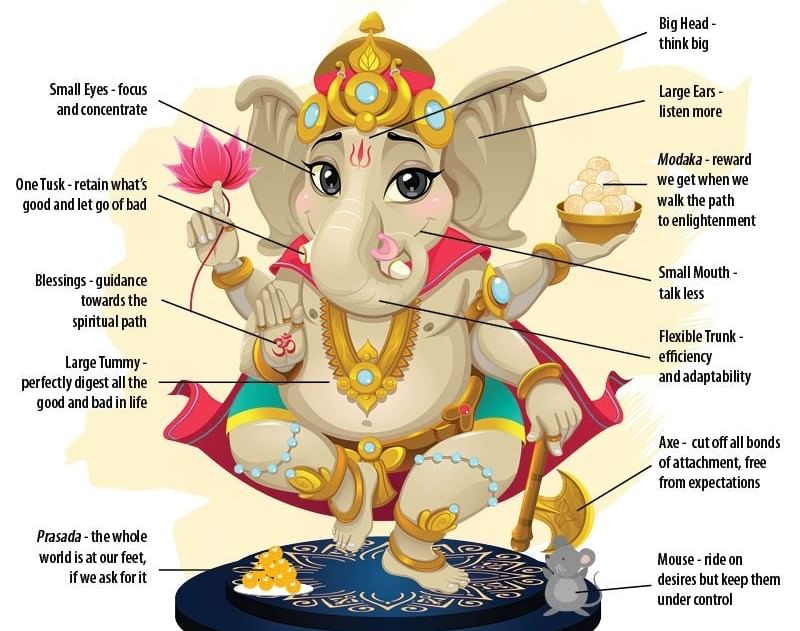
Table of Contents
Ganesha, the most beloved deity, is worshipped across the world. Different names hail him, and each one makes this unique Lord extremely special. Ganesha's attributes can be a great way to lead ourselves.
Leadership Traits Inspired by Lord Ganesha's Stories
Purpose & Perseverance
Ekadanta (single tusk) is one of Ganesha's names which originated when he lost his tusk while proving his determination to write the great epic Mahabharata. Sage Vedavyasa appealed to Ganesha to write the Mahabharata, for which Ganesha agreed that Vedavyasa would recite the lines without interruption. Vedavyasa, in turn, said that Ganesha, too, should not break the momentum of writing. The feather pen used by Ganesha broke while writing; the great Lord then cut off his tusk to continue writing, such was his determination towards any task.
Ekadanta's undaunted, purpose-driven approach and perseverance are worth imbibing!
Walk the Talk
Gajanana (Elephant Head) is the name given by his father, Lord Shiva, and there is a story behind this name. Parvati, the mother of Ganesha, created a child by giving it a form using turmeric paste. Parvati was heading for a bath one day when she asked her son to stay guard and not let anyone in. Shiva, after his meditation, wished to see Parvati, but to his dismay, he was stopped by a young boy. Not knowing that the boy was his son, Shiva became furious and slashed the boy's head with his Trishul. Parvati was grief-stricken, and Shiva realised his mistake. Shiva then arranged for an elephant's head, revived the boy, and named him "Gajanana."
Gajanana's promise to his mother and his fight to keep his word is a lesson for us to imbibe. Keeping one's words, acting on them, and being assertive, needs courage, and such qualities sure make great leaders.
Action led by clarity
Ganapati (Lord of the Lords) is a name symbolising Ganesha's intellect and wisdom. Shiva promised the fruit of knowledge to the one who could traverse the universe and get back first. Karthikeya felt very confident in his peacock and set off on his journey of three worlds while Ganesha circumambulated his parents. When asked why he did so, Ganesha said that his parents, Shiva and Parvati, constituted the three worlds. Hearing his analysis, Ganesha was gifted the fruit of knowledge by Shiva.
Ganesha's respect for His parents, considering them as the universe, is a lesson for every individual who needs to treat parents with respect instead of abandoning them in their old age. Clarity leads to precision in action, which is expected of leaders, and Ganesha gifts us with "leadership in action."
Every particle, part and action of Ganesha is a message to the world. Ganesha's large ears emphasise listening skills for leaders. Better listening leads to the right decisions. The four hands represent life goals:
- Dharma (righteousness), Kama (pleasure)
- Moksha (liberation)
- Artha (economic prosperity)
Ganesha's trunk signifies both adaptability and efficiency. The small eyes depict the eye for details that a leader should possess. The big head symbolizes a large vision futuristic approach. Every molecule, every thought, the whole form of Ganesha blends with each of us. Just give it a thought and absorb the essence! What can be a better moment than now, when we are amid Ganesh Utsav, a time to feel the presence of Ganesha within each of us and be fully aware of the divine potential that makes each one a great leader?





















POST YOUR COMMENT