
CBSE 12th Physics practical question papers consisted of 2 experiments, an investigatory project, practical record and viva voce. The Physics practical exam carries a total of 30 marks.
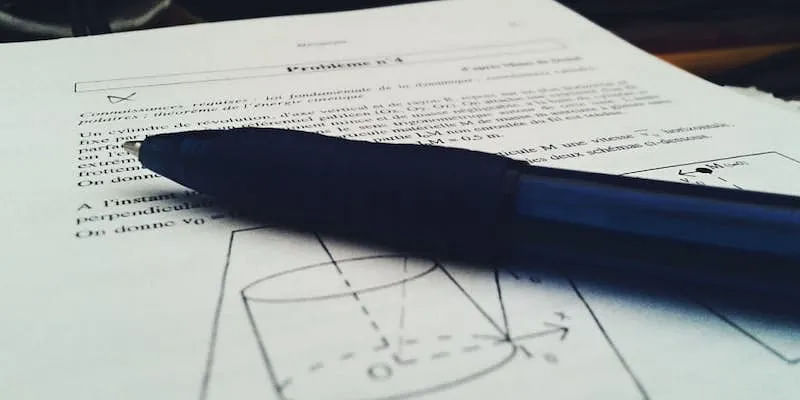
Table of Contents
- CBSE 12th Physics Practical Question Paper PDF
- CBSE Class 12 Physics Viva Questions with Answers
- CBSE 12th Physics Practical Question Papers 2026: Marks Distribution
- CBSE 12th Physics Practical Question Papers 2026: Experiment Topics
- CBSE 12th Physics Practical Question Papers 2026: Prescribed Books
- CBSE 12th Physics Practical Exam 2026: Preparation Tips
The practical question papers of the CBSE 12th Physics exam are a collection of sample papers for the Physics practical exam. In the CBSE class 12th exam for Physics practical, students will be evaluated for 30 marks divided into 5 components, under which the experiments in sections A and B carry 8 marks each, the investigatory project carries 3 marks, and the practical record and viva voce carry 6 and 5 marks respectively. The viva voce is conducted based on the experiments.
The CBSE 12th Physics Practical question papers are an essential resource for students to excel in the upcoming class 12th exams. Practising the CBSE 12th physics practical viva questions will help students get an idea about what may come in the practical examination.
Also Check: CBSE Class 12 Question Bank - All Subjects PDF Download
CBSE 12th Physics Practical Question Paper PDF
Candidates can download the question paper for CBSE Class 12 Physics practicals PDF from the table below. Students must review the CBSE Physics Practical class 12 question Paper with answers, along with the updated syllabus and marks distribution, before studying for the board exam.
| Particulars | PDF Link |
| CBSE Class 12 Practical Question Paper For Physics | Download Now |
CBSE Class 12 Physics Viva Questions with Answers
The following are some of the CBSE 12th Physics practical viva questions with answers that students can review while preparing for the practical exams. The CBSE Physics Practical class 12 viva questions are prepared as per the core topics in the syllabus, such as verifying Ohm's Law, measuring resistance, studying refraction through a prism, understanding the behaviour of light and electrical circuits, and others.
Q1. What is Coulomb’s Law?
Answer: Coulomb’s Law describes the force between two charged objects. The force depends on the magnitude of the charges and the distance between them. It can be either attractive or repulsive depending on whether the charges are opposite or alike.
Q2. Define focal length and radius of curvature.
Answer: The focal length is the distance between the lens or mirror and its focus, where light rays meet after reflection or refraction. The radius of curvature is the distance from the center of a curved mirror or lens to its surface, representing the radius of the sphere from which the lens or mirror is part.
Q3. What is the formula of Ohm’s law?
Answer: V=IR, where V stands for voltage, I for current, and R is resistance.
Q4. What is Ohm’s Law?
Ans: Ohm’s law states that the current flowing through a conductor is directly proportional to the voltage across it, provided the temperature remains constant. In simple terms, if the voltage increases, the current increases, and if the voltage decreases, the current decreases.
Q5. Unit of current.
Answer: Ampere (A).
Q6. Give the SI unit of resistance.
Answer: Ohm (Ω)
Q7. SI unit of potential difference.
Answer: Volt (V).
Q8. Define electrical conductivity.
Answer: Electrical conductivity refers to a material's ability to allow electric current to pass through it. Materials with high conductivity, like metals, allow electricity to flow easily, while materials with low conductivity, like rubber, resist the flow.
Q9. What is a p-n junction diode?
Answer: A p-n junction diode is a semiconductor device formed by joining p-type and n-type materials. It allows current to flow in only one direction (forward bias) and blocks current in the opposite direction (reverse bias).
Q10. Define the photoelectric effect.
Answer: The photoelectric effect occurs when light hits a metal surface and causes the emission of electrons. This happens when the energy of the light is enough to overcome the work function of the metal.
Q11. Define a rheostat.
Answer: A rheostat is a variable resistor used to control the current flowing through a circuit.
Q12. What material is used in a rheostat’s wire.
Answer: The wire in a rheostat is usually made of constantan or manganin.
Q 13. What is the difference between potential difference and emf?
Answer: The potential difference is the energy required to move a charge between two points in a circuit. The emf (electromotive force) is the potential difference when no current is flowing from a power source, like a battery.
Q14. Why are connecting wires thick and covered with cotton?
Answer: Thick wires have low resistance and ensure efficient current flow. The cotton covering prevents short-circuiting by insulating the wires.
Q 15. Define a metre bridge?
Answer: A metre bridge is a device used to measure an unknown resistance based on the principle of the Wheatstone bridge. It consists of a long wire mounted on a wooden frame.
Q16. What is superconductivity?
Answer: Superconductivity is a property of certain materials where they have zero electrical resistance when cooled to very low temperatures.
Q17. What is a potentiometer?
Answer: A potentiometer is an instrument used to measure small potential differences accurately and compare the emf of different cells.
Q18. What is the principle of a potentiometer?
Answer: The principle of a potentiometer states that the potential difference across a uniform wire carrying a steady current is directly proportional to the length of the wire.
Q19. How is a galvanometer converted into (a) a voltmeter and (b) an ammeter?
Answer: (a) To convert a galvanometer into a voltmeter, a high resistance is connected in series with it. (b) To convert it into an ammeter, a low resistance is connected in parallel.
Q 20. How does temperature affect resistance?
Answer: As the temperature of a conductor increases, its resistance also increases because the movement of atoms in the conductor interferes with the flow of current.
Q 21. What is the reason behind the null point?
Answer: The null point is where the emf of the cell is balanced by the potential drop along a specific length of the potentiometer wire, resulting in no current flow through the galvanometer.
Q 22. What is meant by a cell’s internal resistance?
Answer: The internal resistance of a cell refers to the resistance to current flow within the cell itself, caused by the electrolyte and the internal components of the cell.
Q 23. What is meant by a primary cell?
Answer: A primary cell is a type of cell that cannot be recharged. Once its chemical energy is depleted, it is discarded.
Q 24. What is meant by a secondary cell?
Answer: A secondary cell is a type of rechargeable cell that can be used multiple times, such as lead-acid or lithium-ion batteries.
Q 25. Why does a secondary cell give more electric current than a primary cell of the identical e.m.f.?
Answer: A secondary cell provides more current because it has a lower internal resistance compared to a primary cell, allowing more current to flow.
Q 26. Does resistance depend on the dimensions of the conductor?
Answer: Yes, resistance depends on the length and cross-sectional area of the conductor. Longer conductors have more resistance, and thicker conductors have less resistance.
Q 27. What is specific resistance?
Answer: Specific resistance, or resistivity, is a material's intrinsic property that indicates how strongly it resists the flow of electric current. It is measured in ohm-meters.
Q 28. What is the SI unit of resistivity?
Answer: ohm-metre (Ω·m).
Q 29. What is electrical conductivity?
Answer: Electrical conductivity is the ability of a material to allow an electric current to pass through it. It is the reciprocal of resistivity.
Q 30. How is a galvanometer converted into (a) a voltmeter and (b) an ammeter?
Answer: (a) A galvanometer is converted into a voltmeter by connecting a high resistance in series. (b) It is converted into an ammeter by connecting a low resistance in parallel.
CBSE 12th Physics Practical Question Papers 2026: Marks Distribution
The marks distribution for the CBSE class 12 Physics examination is shared in the table below. As per the CBSE class 12 syllabus 2024-25, experiments in the class Physics practical exam 12 carry 16 marks.
| Topic | Marks Distribution |
| Section A Experiment | 8 |
| Section B Experiment | 8 |
| Practical Record (experiment and activities) | 6 |
| Project | 3 |
| Viva-Voce | 5 |
| Total Marks | 30 |
CBSE 12th Physics Practical Question Papers 2026: Experiment Topics
The CBSE Class 12th Physics Syllabus 2026 has been released for the theory and practical exams. The topics for experiments in sections A and B have been shared in this section. Students appearing for the board examination in the session 2026, can form an idea of the topics of experiment in both sections.
Experiment Topics in Section A
- Finding the resistance of a wire through a metre bridge and determining the resistivity or specific resistance of the material.
- Determining the resistance per centimetre of a wire by plotting the graph for current and potential differences.
- Verifying the laws of series combination of resistances with the use of a metre bridge.
- Comparing the EMF of two primary cells with the use of a potentiometer.
- Verifying the laws of the parallel combination of resistances with the use of a metre bridge.
- Determining the internal resistance of a primary cell with the use of a potentiometer.
- Finding the frequency of the AC mains using a sonometer.
- Converting the galvanometer of a known resistance and a figure of merit into a voltmeter of a certain range, and verifying the same.
- Determining the resistance of the galvanometer using the method of half-deflection and finding its figure of merit.
- Converting the galvanometer of a certain given resistance and a figure of merit into an ammeter of a certain range, and verifying it.
Experiment Topics in Section B
- Finding the v-value for different u-values for a concave mirror and finding the focal length.
- Finding the focal length of a convex mirror with the use of a convex lens.
- Finding the focal length of a convex lens through plotting graphs between -values and v-values.
- Finding the focal length of a concave lens with the use of a convex lens.
- Determining the minimum deviation angle for a prism by plotting a graph between the angle of deviation and the angle of incidence.
- Determining the refractive index of glass with the use of a travelling microscope.
- Finding the refractive index of any given liquid through a convex lens and a plane mirror.
- Drawing the I-V graph for a p-n junction in forward and reverse bias.
- Drawing the curve of the Zener diode.
- Determining the wavelength of the laser beam by the method of diffraction.
Also Check: CBSE Class 12th Physics Question Paper
CBSE 12th Physics Practical Question Papers 2026: Prescribed Books
Students should study the prescribed CBSE 12th books while preparing for the exam to score good marks. The books that are officially prescribed for CBSE class 12 Physics Practical are as follows:
- Physics Class XI, (Part I and II) - NCERT
- Physics Class XII, (Part I and II) - NCERT
- Laboratory Manual of Physics for Class XII - NCERT
CBSE 12th Physics Practical Exam 2026: Preparation Tips
Students should focus on vital concepts and experiment-related theories to successfully reply during their viva examination. Practising the CBSE 12th Physics Practical question papers will help students work on both theoretical knowledge and practical skills, while becoming familiar with the question types.
The model question papers will help students with CBSE 12th preparation. Students can follow the tips below while preparing for the Physics practical exam.
- Practising the experiments - It is important to keep practising the experiments because there are several minute details to be taken care of while performing the experiments. Practising regularly will only enhance the speed and accuracy of the results of the experiment.
- Understanding the experiment - The experiments must be understood clearly before practising. The procedures must be understood well.
- Practical Record Book - All the experiments must be noted down well in the practical record book. The procedures, observations and inferences must be written in a step-by-step manner.
- Viva Voce - The viva voce will be conducted on the basis of the experiments performed. Therefore, it is important to know the concepts thoroughly.
- Investigatory project - The topic selection for the investigatory project must be done carefully. The observations must be charted down.
- Revision - It is very important to know and remember the topics very well. Therefore, revising the topics on a regular basis is very helpful.
- Managing time - Time management skills must be honed. It is important to set the time that can be dedicated to each experiment before starting with it.








POST YOUR COMMENT