
Solving the problems related to cancer in India, requires universities, and institutes should start special science-based courses on cancer biology that could train students to develop tools for the early detection of cancer and therapies to cure the disease.
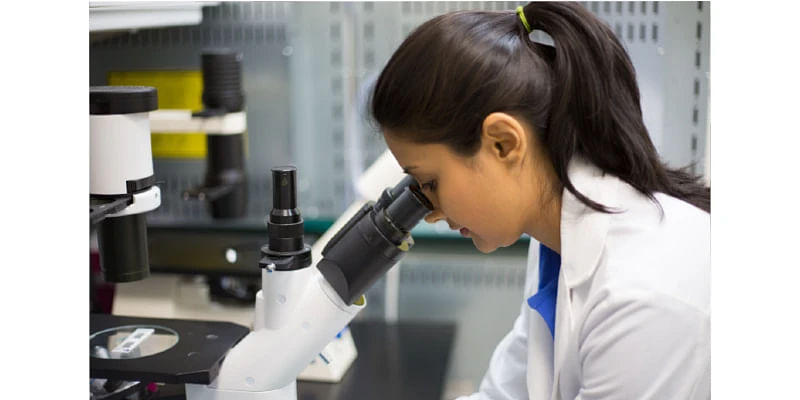
To solve the problems related to cancer in India, universities, and institutes should start special science-based courses on cancer biology that could train students to develop tools for the early detection of cancer and therapies to cure the disease.
Cancer is one of the most common diseases worldwide. According to the World Health Organization (WHO), cancer is the leading cause of death worldwide, causing nearly 10 million deaths in 2020, or one in six cancer deaths. Breast, lung, colon, and prostate cancer are known as the most common cancers in the world. Based on the National Cancer Registry Program of the Indian Council of Medical Research (ICMR), Government of India, the incidence of cancer in India has been estimated at 13.9 million in 2020, which will be 14.2 million in 2021 and 14.6 million in 2022. Mortality was 7.7 million in 2020, 7.8 million in 2021, and 8.0 million in 2022. In India, the number of cases is expected to rise to 29.8 million by 2025.
In recent decades, the number of cancer patients in India has increased significantly due to lifestyle changes, increased life expectancy, and easy access to diagnostic facilities. India is one of the fastest-growing countries in the world, not only in terms of infrastructure, economy, IT, workforce, and entrepreneurship but also in terms of population and number of cancer patients.
According to the International Agency for Research on Cancer (IARC) and WHO, India's cancer burden will double over the next 20 years, from 1.3 million in 2020 to 2.2 million in 2040, and the death rate from 0.8 million in 2020 to 1.4 million. in 2020. 2040. This makes the disease epidemic in nature and India can be called the cancer capital of the world. This is certainly due to contaminated food and water and the presence of harmful chemicals, pesticides, antibiotics, and pathogenic bacteria and viruses in everyday items.
Continued exposure to such carcinogenic/pathogenic or genotoxic agents causes genetic mutations that accumulate with age and cause an increase in the number of cancers in the population. Cancer is a preventable disease and can be cured if detected early. Most often, cancer patients come to the clinic when the disease has progressed and becomes aggressive. Early detection of the disease is very important for better treatment. Therefore, to ensure better care and management, it is important to have a well-trained workforce, including doctors, scientists/researchers, and support staff. In addition, a well-educated workforce is needed to educate, counsel, and inform the public about cancer, its potential risk factors, related facts/myths, and the psychological and social effects of the disease.
There are several institutions in the world like National Cancer Institute (NCI), Stanford University, the University of Chicago, and the University of Kansas Medical Center, United States; the Institute of Cancer Research and University of Cambridge, United Kingdom; the University of Zurich, Switzerland; and the German Center for Cancer Research (DKFZ) in Germany, offering science-based courses in cancer biology, among many others, to train a future workforce that can effectively contribute to cancer treatment.
However, such specialized training institutions/research centers are currently few in India compared to the number of cancer cases in the country. India's first National Cancer Institute (NCI) was established in 2015 at Jhajjar, Haryana under the umbrella of AIIMS New Delhi. This institute became operational in 2018. This institute is expected to bridge the gap in cancer treatment by providing state-of-the-art facilities to patients and plays a revolutionary role in the field of translational cancer research.
Several other public and private institutions including the Indian Council of Medical Research (ICMR), Council of Scientific and Industrial Research (CSIR), Department of Biotechnology (DBT), Department of Science and Technology (DST), All India Selected Laboratories and Centers Indian Institute (DST), All India Selected Laboratories and Centers Indian Institute of Medical Sciences (AIMS), Indian Institutes of Technology (IIT), Advanced Center for Cancer Treatment, Research and Training (ACTREC), Indian Institute of Science (IISc) and selected private universities like Manipal University, Shoolin University, Amity University and many. others began offering Ph.D. in cancer biology and other related fields.
Prof. Dhruv Kumar, Head, of Allied Health Sciences Cluster, College of Health Sciences and Technology, UPES, Dehradun recently established the Translational Cancer Research Center and his team works on cancer early detection, cancer prevention, and treatment projects funded by national and international funding agencies including ICMR, SERB, DST-BRICS, Indo-Japan in collaboration with University of Tokyo, Japan, University of Bologna, Italy, AIIMS New Delhi, AIIMS Bhopal, AIIMS Rishikesh, BARC Mumbai, THSTI Faridabad, Lady Hardinge Medical College, New Delhi, Hansraj College, University of Delhi and Mahavir Cancer Sansthan and Research Center (MCSRC), Patna. UPES faculty and researchers work in various applied areas of interdisciplinary cancer research to develop affordable diagnostics and drugs for the most common cancers in India - oral, lung, breast, cervical, brain, gall bladder, ovarian, blood, liver, and prostate cancer - for effective treatment, skin, and pancreatic cancer.
The incidence of cancer continues to rise in India. Thousands of crores are spent on cancer treatment and care every year, creating a huge financial burden. Early detection strategies and cancer awareness programs help plan for cancer prevention, surveillance, and appropriate disease management, ultimately reducing the financial burden associated with cancer. In the coming years, government and private institutions in India should realize the importance of cancer research and start science-based cancer biology courses and training in cancer-related fields to train a dedicated workforce including doctors, scientists, researchers, and support staff. to develop tools for early cancer detection, cheap and affordable treatment strategies, and to manage large numbers of cancer patients. (The author is a senior lecturer at UPES College of Health Sciences and Technology).
- Dr. Dhruv Kumar





















POST YOUR COMMENT