Parul University hosts Shri Anurag Singh Thakur for a dynamic student session on ‘One Nation, One Election’, exploring the constitutional, economic, and governance impact of synchronized elections in India.
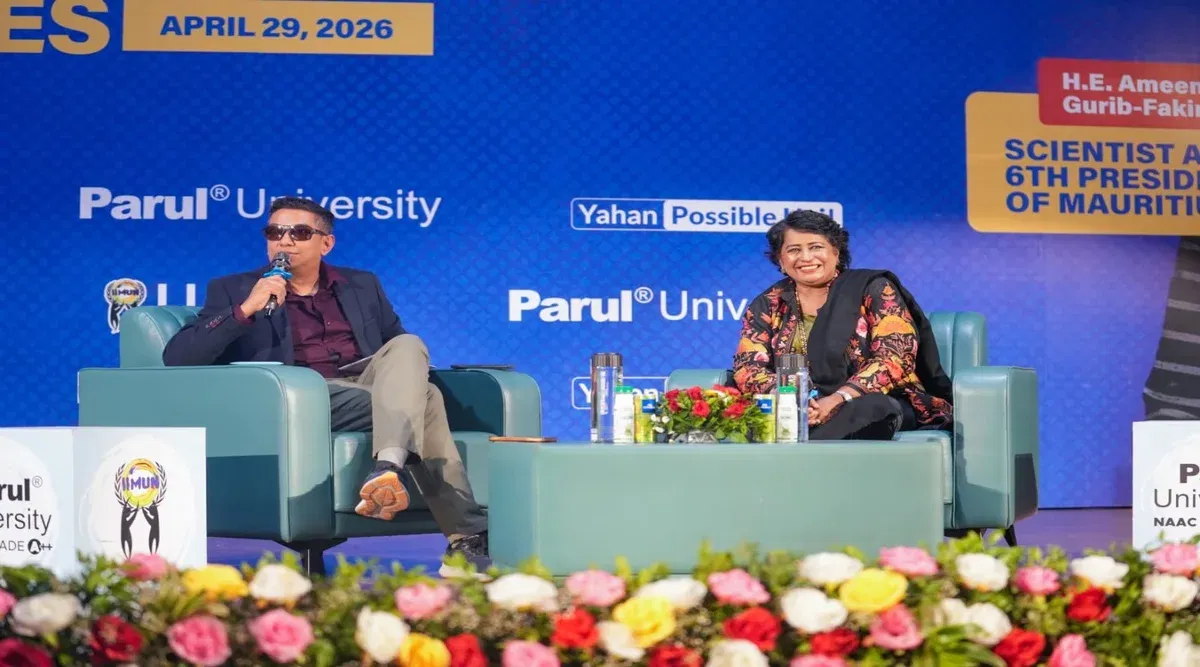
Vadodara-based Parul University, in a transformative dialogue, recently hosted the Former Cabinet Minister of India, Shri Anurag Singh Thakur for a thought-provoking interaction session for students about the constitutional amendment regarding ‘One Nation, One Election’ at the university’s campus. Bringing together over 1000 law students, the session provided an in-depth exploration of the implications, challenges, and prospects associated with synchronizing elections across the country.
Shri Anurag Singh Thakur is a distinguished political leader, sports administrator, and defense officer. His career highlights include serving as the former President of the Board of Control for Cricket in India (BCCI) and being elected as a Member of Parliament five times from Hamirpur, Himachal Pradesh. He played a significant role in organizing Khel Maha Kumbh, which promoted sports participation across India, and was a key contributor to the establishment of the Dharamshala Cricket Stadium. As the youngest elected parliamentarian, he has made remarkable contributions to politics, sports, and defense. He has served as a Lieutenant and currently holds the rank of Captain in the Indian Army. Recognized with the Sansad Ratna Award and the Best Parliamentarian honor, he has played a crucial role in governance and policy-making. As Chairman of the Parliamentary Standing Committee on Coal, Mines & Steel, he has shaped policies related to national resource management and infrastructure development, further cementing his role as a prominent voice in India's political landscape and a key advocate for electoral reforms.
In his speech during the student interaction, Shri Thakur stated, “There is no country in the world where youth make up 65% of its population. There’s only one, and it's India. If we channel this youth power into the right areas, then no one can stop us. We are bound to be the world leader.” Highlighting India’s rising prominence in the global economy, he remarked, “If we look at the global situation today, look at the multinational companies, it is the Indians today who are performing as the CEOs.” Speaking about the significance of the bill, Shri Thakur stated, “One Nation, One Election bill is historic and transformative. It can change the future of India.” He further emphasized, “India stands on the threshold of not just incremental change but at a leap into the era of democratic efficiency. We have before us an opportunity to synchronize our collective electoral heartbeat and hold simultaneous elections.”
Students actively engaged in discussions during the session, asking insightful questions about the legal, economic, and political impact of the proposed amendment. He provided clear explanations, helping students understand the subject while urging them to think critically about India’s constitutional framework and the role of legal professionals in shaping electoral policies. He emphasized that synchronized elections could reduce election costs, ease administrative burdens, and improve governance by ensuring policy continuity and stability. In conclusion, Shri Thakur stressed the democratic and economic benefits of electoral synchronization, explaining how it saves time and resources, enhances governance, strengthens federal coordination, supports GDP growth by minimizing election disruptions, and ensures the fundamental democratic rights of voting and contesting elections.
The event underscored Parul University’s unwavering commitment to providing its students with opportunities to engage with policymakers and industry leaders, thereby fostering an environment of practical learning and legal discourse. Such interactions empower students with firsthand knowledge and perspectives, preparing them to contribute meaningfully to the nation’s legal and governance landscape. The university continuously strives to bring distinguished leaders and scholars to its campus, ensuring that students receive exposure to diverse viewpoints and practical insights that supplement their academic learning.