Find complete information for including eligibility criteria, deadlines, application procedure for Indian Colleges
Anushka, a fourth-year law student at UPES, is the epitome of ‘Shakti' in every way. She has overcome her challenges by founding the ‘Naari' organization to eradicate period poverty, writing books and research papers on women’s concerns, receiving accolades from the New Zealand Prime Minister for her efforts, and currently serving as the President of the West Bengal Human Rights Council.
Throughout the years, many voices, in various forms, have added to the discourse on women's financial inability to acquire menstruation products in different areas of the world. Anushka, a UPES student pursuing B.A. LL.B. with a specialization in Energy Laws is one such young leader. She's utilizing her educational and advocacy talents to raise awareness about women's concerns by including communities in talks and aiding women in every way she can.
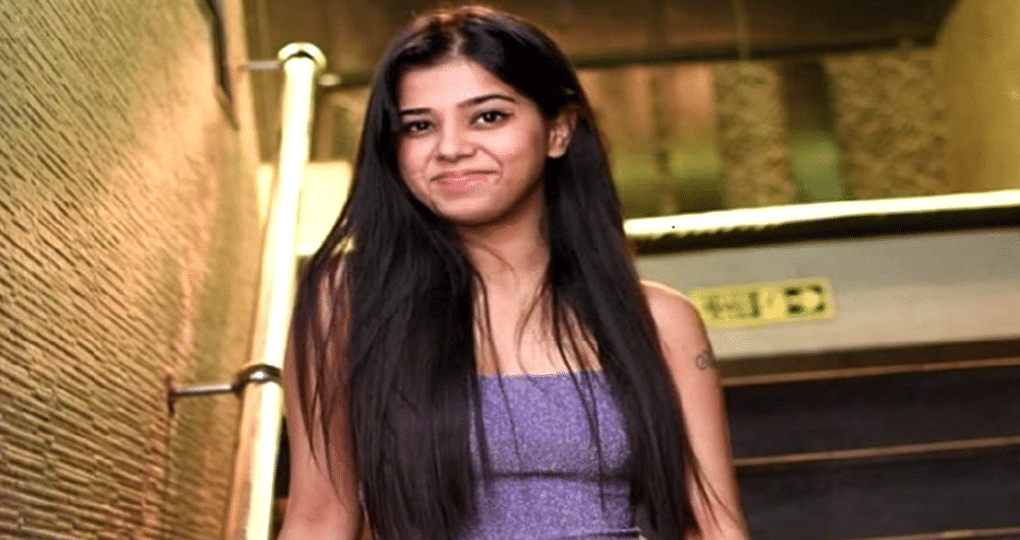
“I aim to fight towards eradicating all forms of gender abuse and prejudice.“There was a triggering point in my life when I felt compelled to speak up not only for myself but for all the girls and women out there,” Anishka recalls.
“I had been in an abusive relationship for a long time. This individual pushed me to the point of a nervous collapse. I flew back to Jamshedpur, my hometown. I was able to put myself together with the help of my father. I delivered my thesis titled "Criminalising of Marital Rape in India: A Distant Dream" at the National University of Singapore, for which I earned the "Young Researcher Scholarship Award." I also authored a book about the same subject that was translated into 16 languages throughout the world,” she adds.
During this procedure, I discovered another stunning realization: India's period poverty problem. After cleaning their clothes throughout their menstrual cycle, many women reuse them. I was well aware that it may lead to infection. I had no choice but to act. As a result, the organization ‘Naari' was founded to raise awareness about menstruation health and cleanliness in rural regions, give sanitary napkins to impoverished women, and speed up response to this issue in metropolitan India.”
This organization is led by Anushka and her companion Sanghamitra. “We started with 15 women,” she explains. More than 7000 women in rural India have received sanitary napkins as of today. My friend's funds, as well as the royalties from the two books I had written, were used to pay for the project.”
Anushka is also the President of the West Bengal Human Rights Council, which is part of the Women's Indian Chamber of Commerce and Industry and deals with complaints of women's and children's human rights violations. “At all levels, we raise awareness, give pro bono legal assistance, and provide seminars and webinars. We aim to help women in a variety of ways, including medical, mental, and physiological support. If the scenario allows, I go meet them or chat to them on the phone.”
Anushka is proud to be the leader of a human rights council with over 30 members, including trainees and volunteers. However, The day she got a letter from New Zealand Prime Minister Jacinda Ardern stands out to be her biggest achievement.
“The Prime Minister answered a series of questions I had posed to her about the challenges that women leaders encounter and how she tackles them. I had sent her a lengthy email, and to my surprise, she had responded to each one of my points. She complimented me on the job I've been doing for the country's women. That gave me a huge lift in self-assurance. I adore her and hope I could be like her; that is the sort of feminism I yearn for and desire to see in my nation. Her approach to her personal life, her children, and her professional life, as well as a full country, is inspiring.”
How does she want to broaden the scope of her campaign? “Through my organization, Naari, I strive to put an end to period poverty. Because the problem is so enormous, it will undoubtedly take time. Every day, I try to empower more females so that they can stand up for themselves, realize the value of financial independence, and are not subjected to violence, discrimination, or abuse in any setting, personal or professional. That's something I'm passionate about, and it's also one of the reasons I'm studying law.”
For further details visit the website